Best Kumamoto Ramen: Mayu, Tonkotsu, and Where to Eat
Kumamoto ramen is a distinctive style of Kyushu tonkotsu ramen characterised by its creamy pork-and-chicken broth, thick straight noodles, and a rich topping of black garlic oil. Discover how it differs from Hakata style.
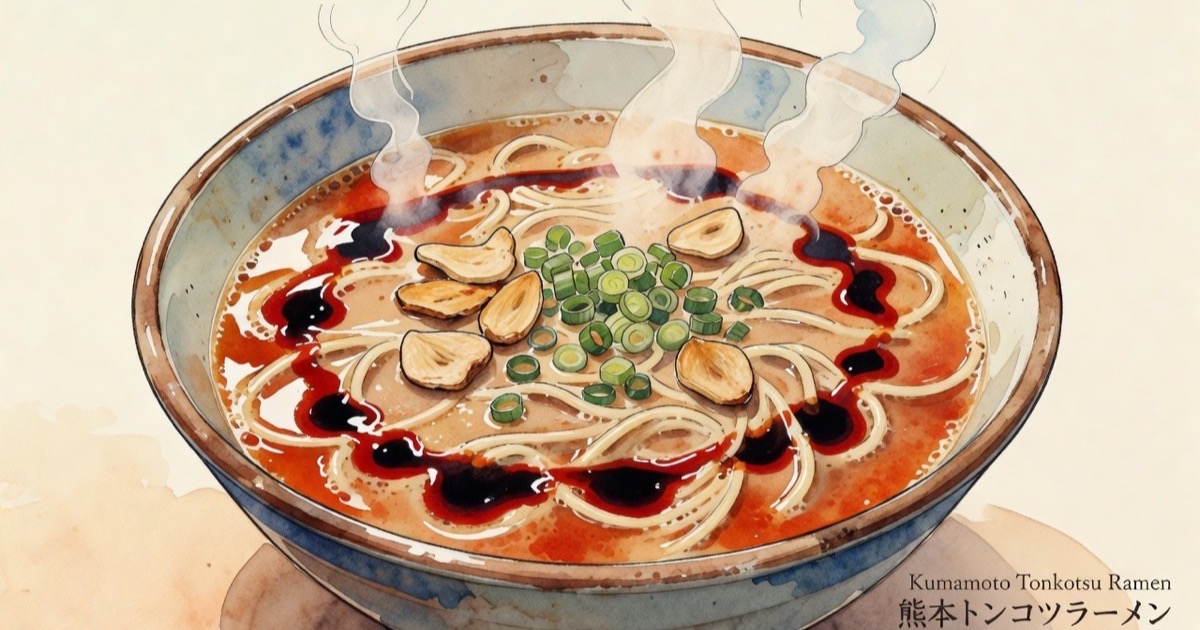
Kumamoto ramen is a distinctive style of Kyushu tonkotsu ramen characterised by its creamy pork-and-chicken broth, thick straight noodles, and a rich topping of black garlic oil known as mayu. Unlike its famous neighbour in Fukuoka, Kumamoto's version tempers the heavy pork-bone aroma with chicken stock and adds an intense, smoky depth through double-roasted garlic.
Kumamoto vs Hakata: The Two Titans of Kyushu Tonkotsu
While both Kumamoto and Hakata (Fukuoka) styles are built on a pork bone (tonkotsu) base, they have evolved in very different directions. If you are exploring the southern island of Kyushu, understanding these differences is key.
- The Broth — Hakata uses 100% pork bones simmered at a rolling boil. Kumamoto blends pork bones with chicken carcass stock, resulting in a milder, rounder, and creamier soup.
- The Garlic — Hakata rarely uses garlic unless added by the customer. Kumamoto integrates roasted garlic chips and dark mayu oil as a core component.
- The Noodles — Hakata is famous for thin, needle-like noodles cooked extremely firm. Kumamoto prefers medium-thick, straight noodles that offer a softer, more substantial bite.
- No Kaedama — Because Kumamoto's noodles do not get soggy as quickly, the custom of ordering noodle refills (kaedama) is traditionally absent here; shops simply serve larger portions.
The Secret of Mayu: Burnt Black Garlic Oil
The defining characteristic of Kumamoto ramen is mayu (マー油 / 麻油). This is garlic that has been slow-fried in sesame oil and lard in multiple stages, changing from golden brown to deep charcoal black. This frying process caramelises the garlic, removing its harsh raw bite and replacing it with a rich, smoky, slightly bitter-sweet flavour that blends beautifully with the pork soup.
Roasted Garlic Chips
In addition to mayu, many shops scatter roasted, crushed garlic chips (gariku) on top of the bowl. This adds a pleasant, crunchy texture and a toasted aroma that fills the entire shop.
Finding the Best Bowls in Kumamoto
Use the ranked Kumamoto ramen directory to compare the available shop data by rating, station, and recorded price band, or compare the style with our Fukuoka ramen guide. For trip budgeting, see how much ramen costs in Japan.
Frequently Asked Questions
Is Kumamoto ramen spicier than Hakata ramen?
No, the black oil is not spicy chilli oil; it is aromatic garlic oil that provides a smoky, roasted flavour rather than heat.
Why doesn't Kumamoto ramen use the kaedama system?
Kumamoto uses slightly thicker noodles that do not absorb soup as fast, making mid-meal refills unnecessary. If you want more noodles, it is best to order the large portion (oomori) upfront.
Browse ranked shops in Kumamoto
Mapped list with ratings, stations, and tourist-friendly filters.
Best ramen in KumamotoPlanning a Tokyo Ramen Crawl?
Skip the 90-minute tourist lines. Use our free curated walking routes and ticket machine guides to explore neighborhood counters with confidence.
Former Fukuoka tonkotsu ramen apprentice and creator of Japan Ramen Guide. When not exploring Japan's ramen alleys, I build tools for Japan life like Daruma Japan Life and recommend foreigner-friendly housing through Affarah.