What Is Kaedama? How to Order a Ramen Noodle Refill
Kaedama means an extra serving of cooked noodles for the broth left in your bowl. Learn when it is available, when to order, and what to say.
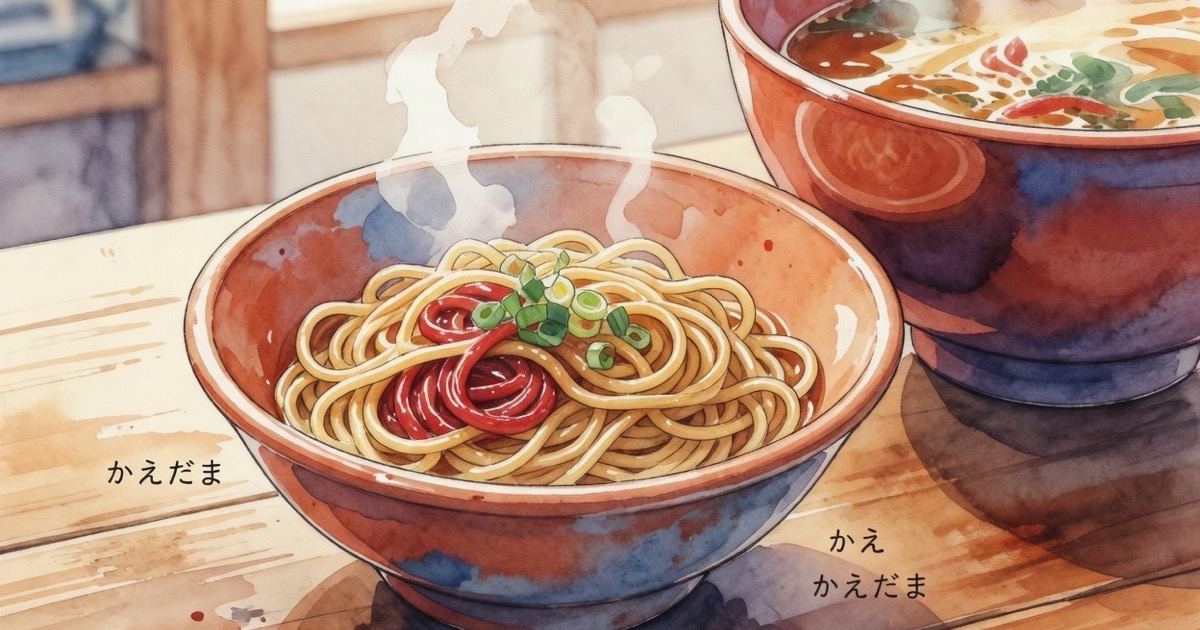
Kaedama (替え玉) is an extra serving of cooked noodles added to the broth left in your bowl. It is most closely associated with thin-noodle Hakata and Nagahama tonkotsu ramen. A kaedama is noodles only—not a second bowl, extra soup, or extra toppings—and it is available only when the shop offers it.
Why Kaedama Exists
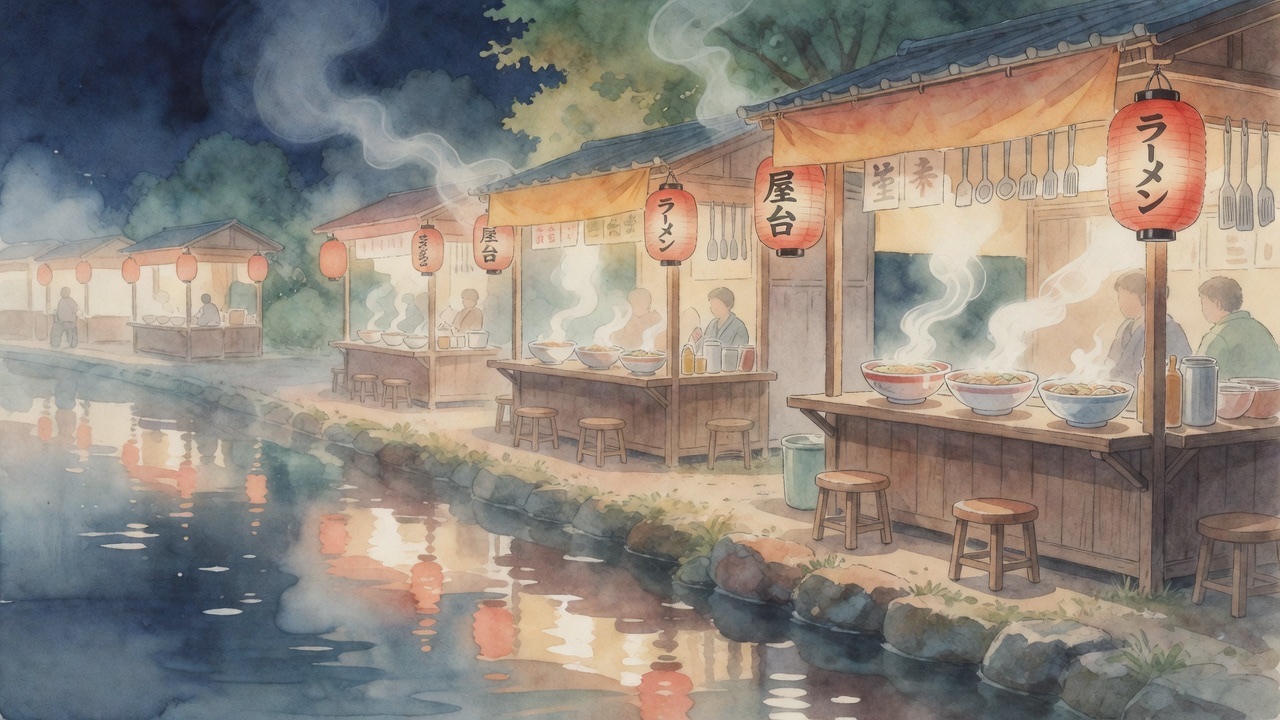
Kaedama developed with the ultra-thin noodles of Nagahama ramen in Fukuoka. Thin noodles cook quickly but also soften quickly, so serving a fresh replacement portion works better than leaving a large serving in hot soup. The custom spread with Hakata-style tonkotsu, but it is not standard at every ramen shop or with every noodle style. Read the Fukuoka ramen guide for the regional context.
How to Order Kaedama
First, check the menu or ticket machine for 替え玉. If the shop offers it, order before you finish the first serving so the broth is still warm and enough remains for the new noodles. The exact process varies by shop: buy a refill ticket, use an extra-order slip, or ask the staff at the counter.
- Leave enough broth: A refill does not normally include more soup. Stop drinking the broth if you plan to order more noodles.
- Order before the bowl cools: Ask while you still have a few bites of the first serving left rather than after the bowl has been sitting empty.
- Choose firmness if asked: You can usually request a different firmness from your first serving. If you are unsure, ask for futsuu (regular) or use the shop's default.
- Adjust only if needed: After adding the noodles, taste the broth before using tabletop ramen tare, sesame, garlic, or other condiments.
Noodle Firmness Levels to Know
- Bari-kata (バリカタ / Very firm): A distinctly firm choice often associated with Hakata ramen.
- Kata or katame (硬め / Firm): Firmer than the shop's regular boil.
- Futsuu (普通 / Regular): The standard option and the safest choice when you do not have a preference.
- Yawa or yawarakame (柔らかめ / Soft): A softer, longer-cooked texture.
Where You Will Find Kaedama
Kaedama is common at Hakata- and Nagahama-style tonkotsu shops in Fukuoka and at tonkotsu specialists elsewhere in Japan. Some branches include a refill, while others sell one separately; availability, price, payment method, and portion size vary. Check the current menu instead of assuming a chain follows one rule at every branch.
The distinction matters: a larger initial noodle portion, a free size upgrade, and oomori are not kaedama because the extra noodles arrive with the original order. Tsukemen noodle-size upgrades are also a different system. For major operators, compare ordering formats in the Japanese ramen chains guide.
Do not assume kaedama is available simply because a shop serves tonkotsu. Look for 替え玉 on the menu or ask staff before finishing your broth.
Frequently asked questions
What does kaedama mean?
Kaedama (替え玉) means an extra serving of cooked noodles for the broth remaining in your ramen bowl. It normally does not include extra soup or toppings.
How do I order kaedama in Japan?
Check that the menu offers 替え玉, then buy a refill ticket or ask the staff by saying ‘kaedama kudasai.’ Order before the first noodles are gone so the remaining broth stays warm.
Does every ramen shop offer kaedama?
No. Kaedama is especially associated with thin-noodle Hakata and Nagahama tonkotsu ramen, but availability and ordering methods vary by shop and branch.
Browse ranked shops in Fukuoka
Mapped list with ratings, stations, and tourist-friendly filters.
Best ramen in FukuokaPlanning a Tokyo Ramen Crawl?
Skip the 90-minute tourist lines. Use our free curated walking routes and ticket machine guides to explore neighborhood counters with confidence.
Former Fukuoka tonkotsu ramen apprentice and creator of Japan Ramen Guide. When not exploring Japan's ramen alleys, I build tools for Japan life like Daruma Japan Life and recommend foreigner-friendly housing through Affarah.