How to Order Ramen in Japan: A Complete Guide for First-Timers
Nervous about walking into a Japanese ramen shop? This step-by-step guide covers ticket machines, counter seating, customisation, and every unspoken rule you need to know.
You've just arrived in Japan (setting up a Japan eSIM ahead of time is highly recommended for navigating the narrow alleys of Tokyo). You're hungry, you've spotted a ramen shop with a queue snaking down the street, and you have absolutely no idea what to do next. Don't worry — Japanese ramen shops follow a very consistent routine, and once you've done it once, it becomes second nature.
What to Expect Before You Even Walk In
The Queue
Popular ramen shops almost always have a line. This is a good sign — it means the broth has been simmering since early morning and the shop doesn't need gimmicks to draw a crowd. Join the end of the queue, stand patiently, and avoid talking loudly. Many shops have a sign near the entrance with their menu; studying it now means you'll be ready when you reach the machine.
Reading the Sign
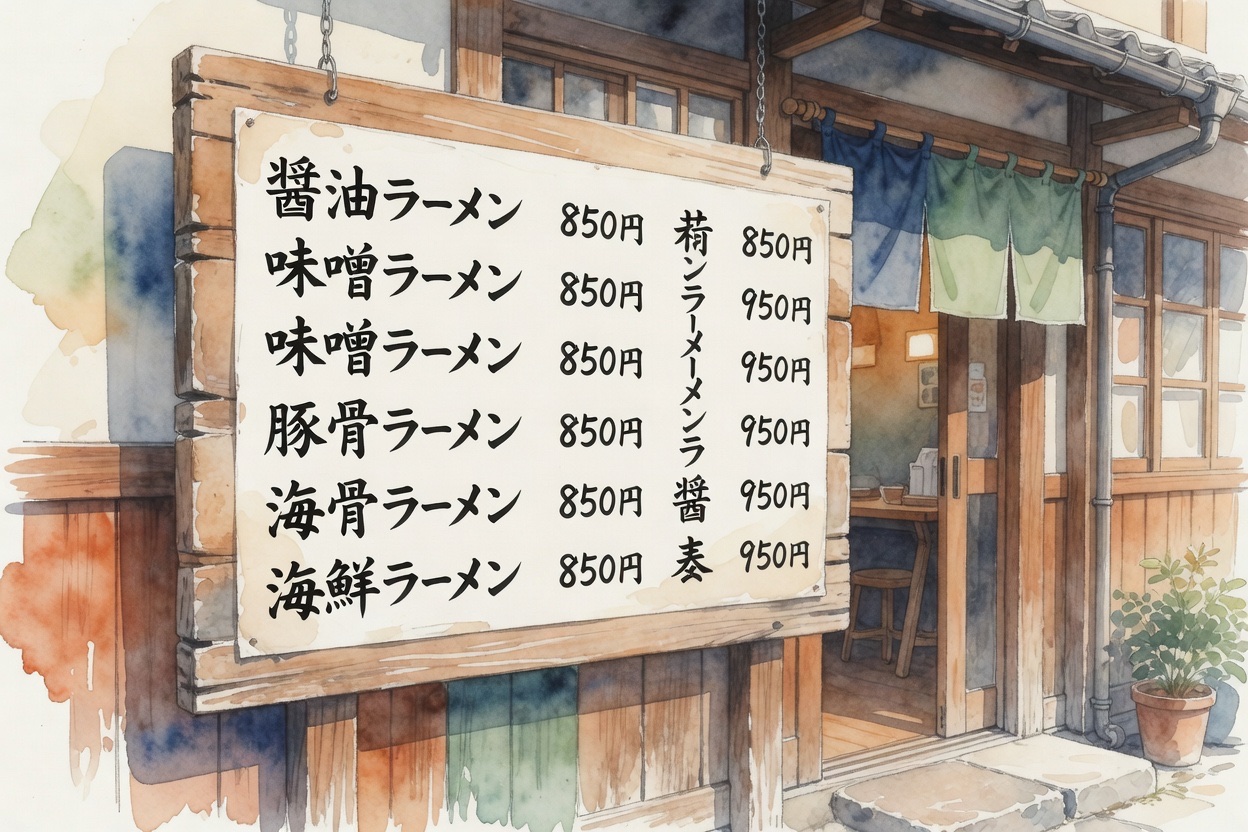
The sign outside usually shows the main bowl styles and prices. Even if you can't read Japanese, photos or prices give you a starting point. Most shops have one signature bowl that accounts for 80% of orders — when in doubt, choose that.
The Ticket Machine (券売機, Kenbaiki)
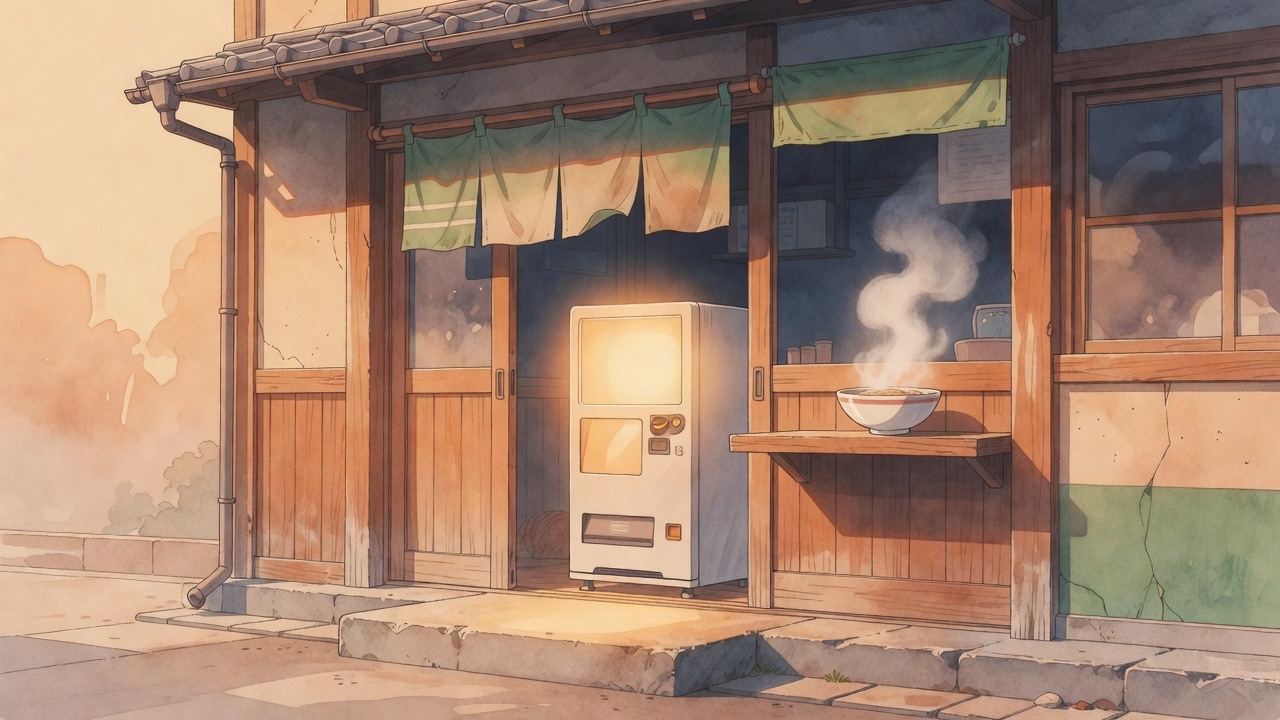
Around 70% of ramen shops in Japan use a vending machine at the entrance to take your order. You pay here, receive a ticket, and hand it to the staff when you sit down. It removes the need for the chef to double as a cashier — a brilliant system that keeps queues moving.
How to Use It
- Insert cash (machines rarely accept cards — always carry ¥1,000 notes and 100/500 yen coins). If you need help calculating foreign exchange or recognising coin denominations, you can convert prices with the offline YenPocket iOS app.
- Press the button for your main bowl. The most expensive or highlighted button is usually the signature dish.
- Add topping tickets if you want extras (chashu, soft-boiled egg, extra noodles).
- Collect your change and your ticket(s).
- Hold onto the tickets — you'll hand them to the staff when seated.
First-hand view of ordering at a Japanese ramen ticket machine
Shops Without a Ticket Machine
Higher-end shops, newer openings, and some traditional establishments take orders at the table or counter. In these cases, staff will bring you a menu (sometimes with English or photos). You order verbally or by pointing. Pay at the end.
Sitting Down
Counter Seating
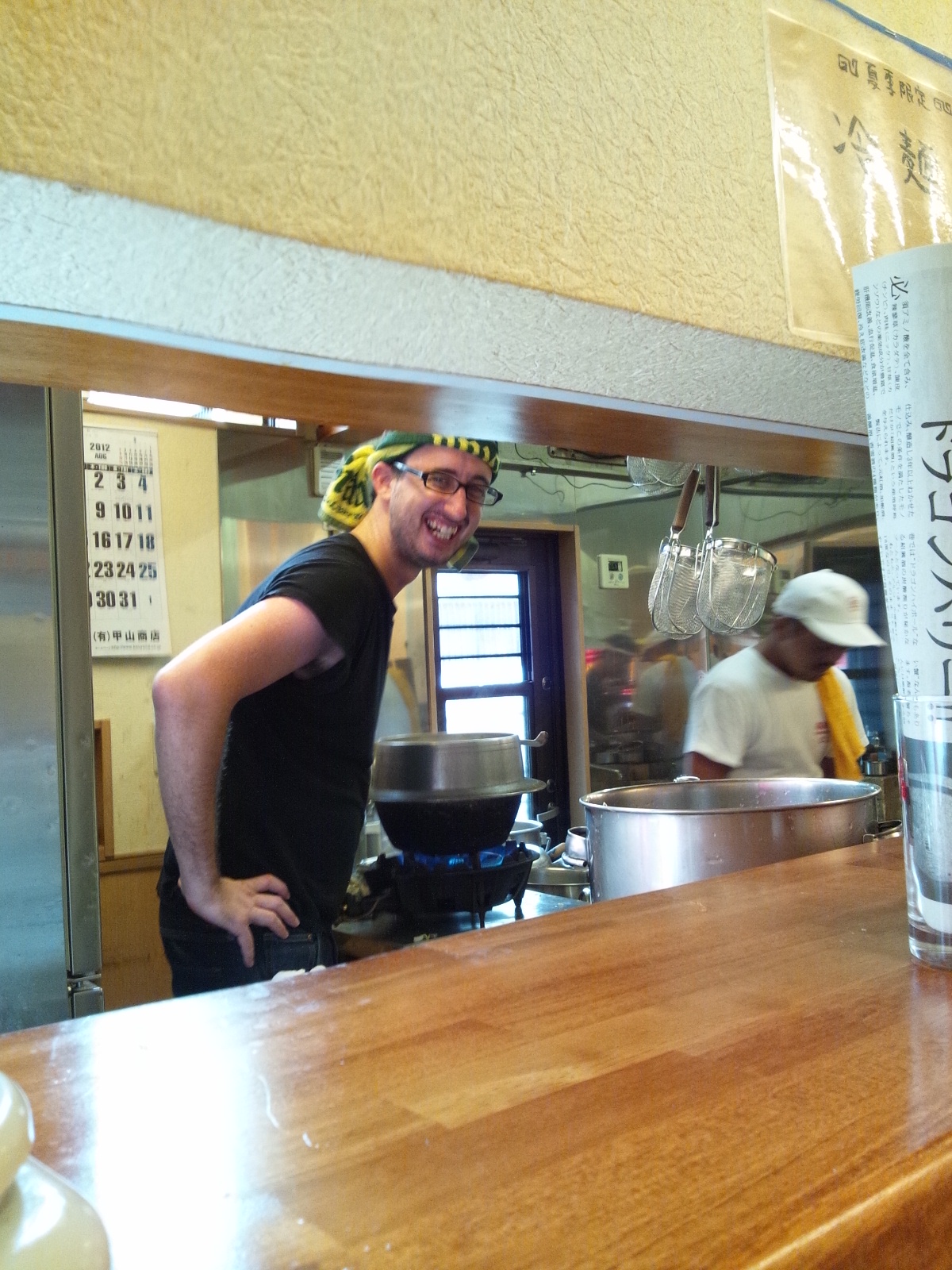
Most ramen shops are small — 10 to 20 seats arranged along a counter facing the kitchen or a partition. Counter seating is intentional. You watch the chef work, your bowl is passed directly across the counter, and you eat alone without expectation of conversation. There's something meditative about it. Ramen shops are arguably the best places to eat solo in Japan.
Handing Over Your Ticket
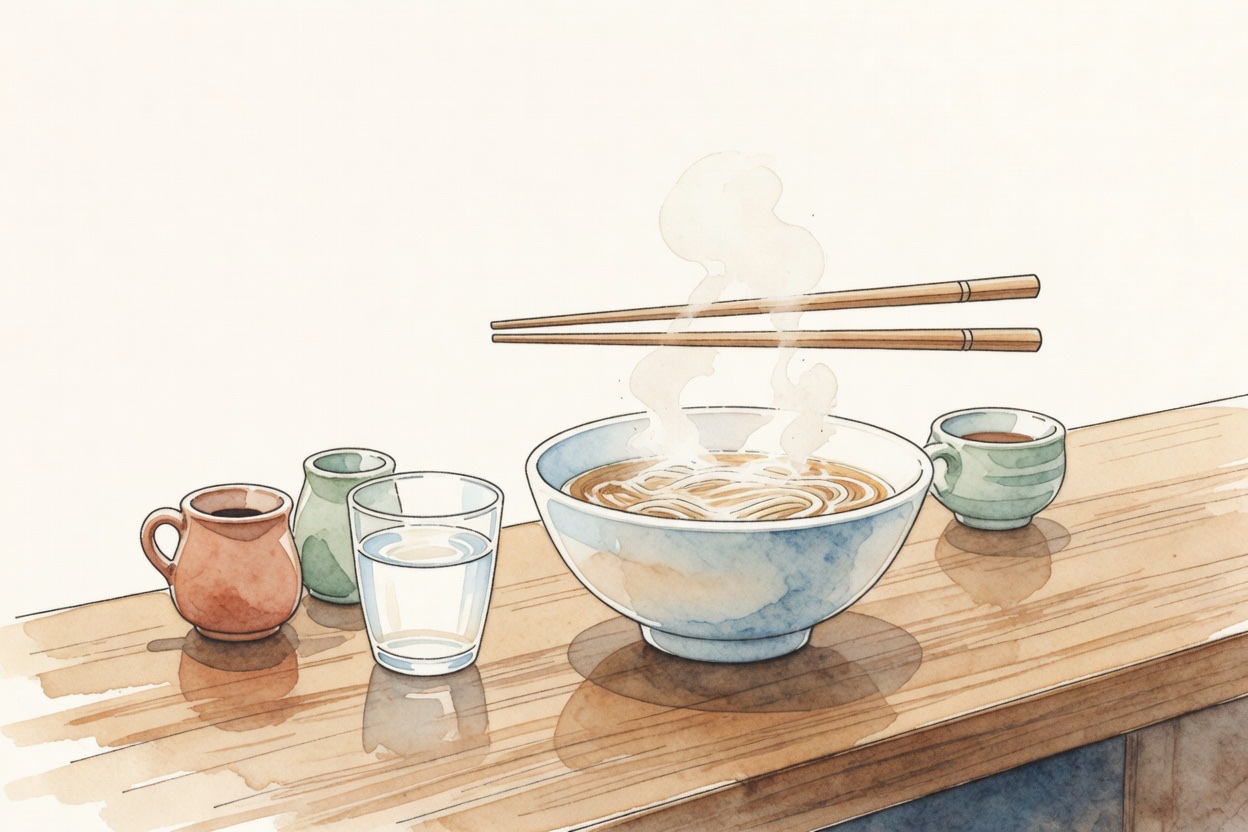
Once seated, place your ticket(s) on the counter in front of you. The staff will pick them up and return a numbered receipt. Your bowl will arrive in about 5–10 minutes. In the meantime, help yourself to water (usually self-service from a jug on the counter) and any complimentary pickles or condiments.

Customising Your Bowl
Many shops — particularly tonkotsu shops in Fukuoka and chain restaurants like Ichiran — let you customise broth richness, garlic, spice level, and noodle firmness. A small paper form at your seat lists the options. Circle your preference or leave blank for the chef's default. Don't stress about this — the default is almost always excellent.
- Koshi (firm noodles) — preferred by regulars; holds up longer in hot broth.
- Futsuu (regular) — the safe, delicious default.
- Yawara (soft) — good if you like noodles that absorb more broth.
- Kaedama — extra noodles added to your remaining broth, usually for ¥100–200.
Eating Your Ramen
Slurping is not only acceptable — it's encouraged. The sharp intake of air cools the noodles and is thought to enhance flavour. Don't hold back. Eat quickly; ramen is designed to be consumed while the broth is at its hottest. A bowl left sitting for 10 minutes is a different experience entirely — not a better one.
The Correct Order of Attack
- Take a sip of broth first, before anything else — this is the chef's signature.
- Eat the noodles next, while they're at peak firmness.
- Work through toppings in any order you like.
- Finish by drinking the remaining broth directly from the bowl if you enjoyed it.
Paying and Leaving
If you paid by ticket machine, you're already settled. Stand up, say gochisousama deshita (ごちそうさまでした — 'thank you for the meal'), and leave. If the shop takes table payment, the staff will bring a bill or direct you to the register. Tipping is not practised in Japan — it will confuse and potentially embarrass the staff.
The whole experience — queue, order, eat, leave — takes 20 to 30 minutes at most. That efficiency is part of the pleasure.
Browse ranked shops in Tokyo
Mapped list with ratings, stations, and tourist-friendly filters.
Best ramen in TokyoTokyo ramen planning
Explore Tokyo by neighborhood and trip style
Open the full Tokyo guidePlanning a Tokyo Ramen Crawl?
Skip the 90-minute tourist lines. Use our free curated walking routes and ticket machine guides to explore neighborhood counters with confidence.
Former Fukuoka tonkotsu ramen apprentice and creator of Japan Ramen Guide. When not exploring Japan's ramen alleys, I build tools for Japan life like Daruma Japan Life and recommend foreigner-friendly housing through Affarah.