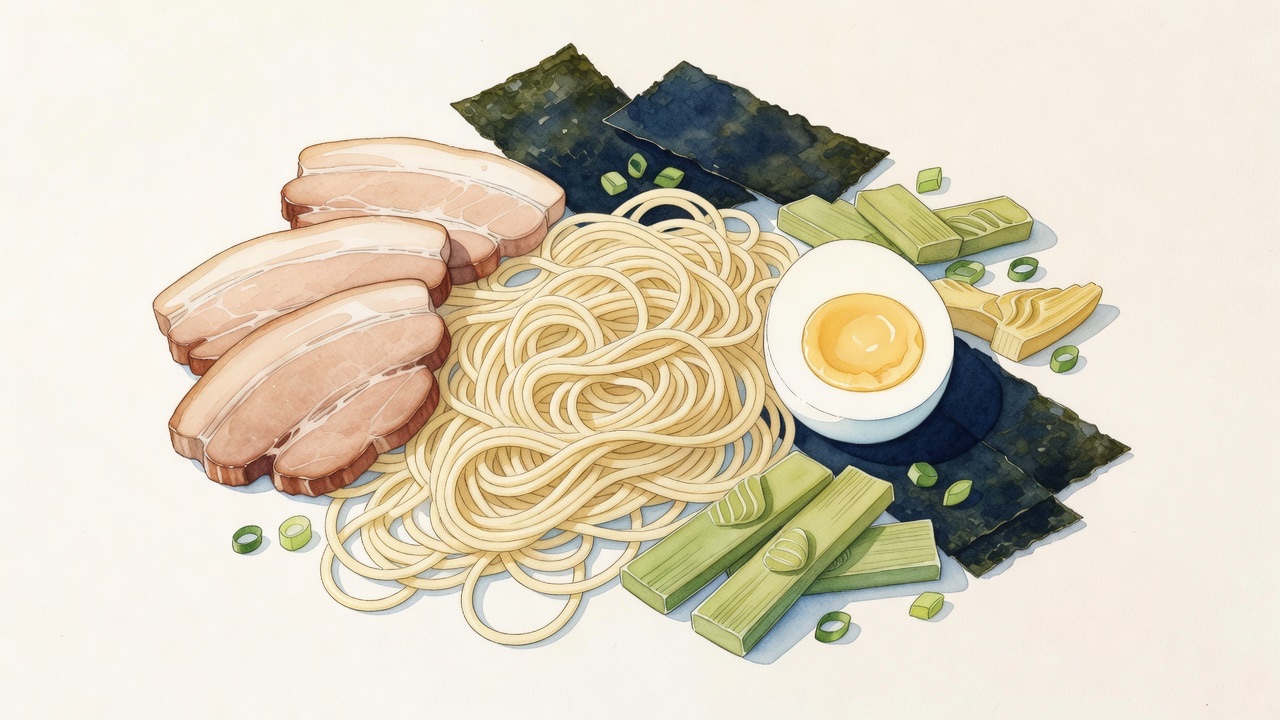
Your First Bowl: How to Choose a Ramen Style When You Have No Idea
Start with light shoyu in Tokyo, rich tonkotsu in Fukuoka, or sweet miso in Sapporo. Use this direct flavor and texture guide to order the right bowl on your first try.
The four classic ramen broths are not equally loved by beginners. Choosing the wrong one for your first bowl can colour the entire experience. This guide cuts through the noise and tells you exactly what each style tastes like — and who it's for.
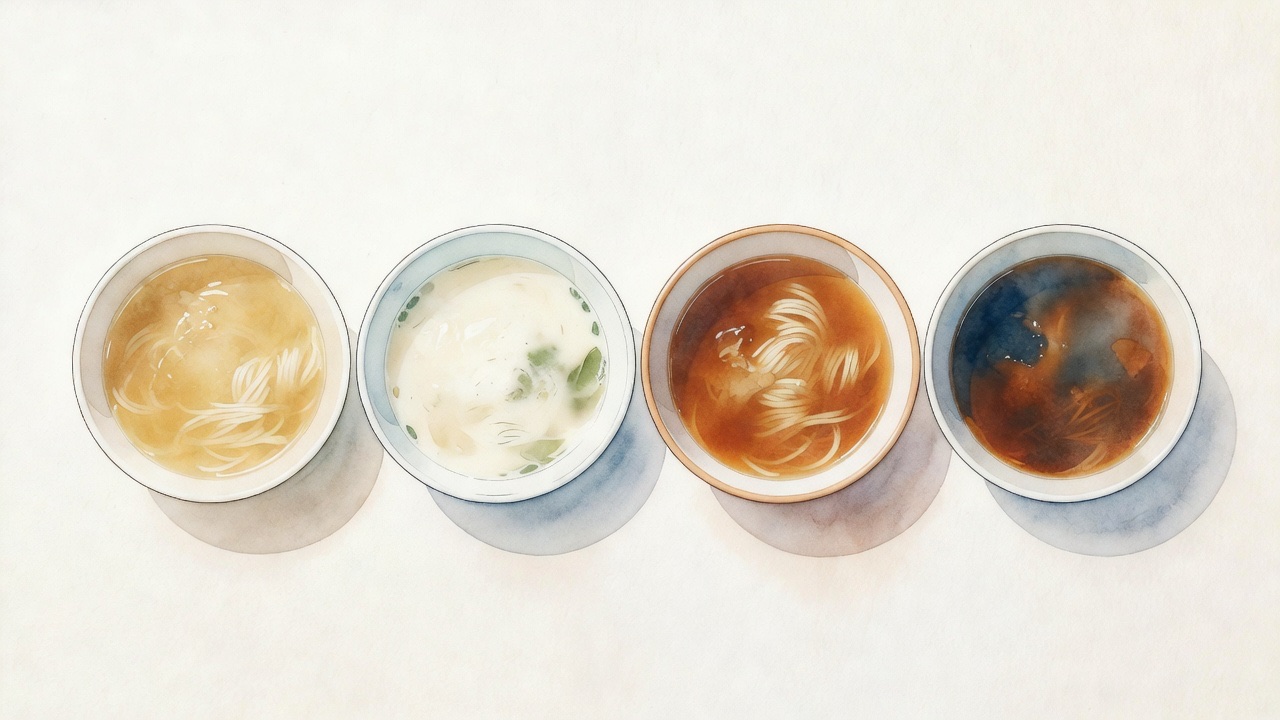
An overview of Japan's major ramen broth bases and styles to help you choose
The Four Classic Broth Bases
Shoyu — Soy Sauce Broth
Shoyu ramen is the original Tokyo style and the most widely available across Japan. The broth is clear to amber, built on chicken or pork with soy sauce tare (seasoning base). The result is savoury, slightly sweet, and deeply umami without being heavy. It's the best starting point for most people.
If you're in Tokyo, Raa Menya Shima serves a refined shio-shoyu bowl that's widely considered one of the city's finest, with a luminous broth that tastes like liquid precision. For something more traditional, Ginza Hachigo is a good bet — they also have an English menu.
Shio — Salt Broth
Shio (salt) is the purest style. The broth is pale gold or nearly clear, delicate, and clean. It showcases the quality of the underlying stock — usually chicken or seafood — without heavy seasoning masking the flavour. Shio ramen originated in Hakodate and Sapporo and is now popular nationwide. Choose shio if you want to taste the broth itself rather than the seasoning.
Miso — Fermented Soybean Paste
Miso ramen is heartier and more complex. The fermented soybean paste gives the broth a nutty, savoury depth with natural sweetness underneath. It originated in Sapporo and is still strongly associated with Hokkaido. If you're visiting Sapporo, miso ramen finished with a pat of butter and sweet corn is a non-negotiable experience.
Tonkotsu — Pork Bone Broth
Tonkotsu is the most internationally famous style — the thick, creamy, milky-white broth made by boiling pork bones for 12–18 hours. It's rich, intensely savoury, and slightly funky in a way that converts people on the spot. It originates in Fukuoka and Kyushu. Fukuoka is its spiritual home and worth visiting just for the ramen.
Beyond the Big Four
Tori Paitan — Creamy Chicken Broth
A relatively modern style, tori paitan uses chicken bones instead of pork to create a similarly thick, creamy broth. It's cleaner and slightly lighter than tonkotsu. Ginza Kagari is one of Tokyo's most celebrated tori paitan shops, with queues to match.
Tsukemen — Dipping Ramen
In tsukemen, the noodles and broth are served separately. You dip thick, cold or room-temperature noodles into a concentrated, intensely flavoured broth and eat them one dip at a time. Rokurinsha at Tokyo Station is possibly Japan's most famous tsukemen shop.
A Simple Decision Framework
- Never had real ramen before? → Shoyu. It's the foundation everything else builds on.
- You love delicate, refined flavours? → Shio. Less is more.
- You want something warming and complex? → Miso, especially in Sapporo.
- You want the most intense, memorable bowl? → Tonkotsu in Fukuoka.
- You're a noodle lover above all? → Tsukemen. The noodles are the hero.
Noodle Types: The Other Variable
Ramen noodles vary enormously by shop. Thin, straight noodles suit lighter broths; thick, wavy noodles hold onto rich tonkotsu. Understanding what's in the bowl before you order helps you appreciate what you're eating rather than just consuming it.
Planning a Tokyo Ramen Crawl?
Skip the 90-minute tourist lines. Use our free curated walking routes and ticket machine guides to explore neighborhood counters with confidence.
Former Fukuoka tonkotsu ramen apprentice and creator of Japan Ramen Guide. When not exploring Japan's ramen alleys, I build tools for Japan life like Daruma Japan Life and recommend foreigner-friendly housing through Affarah.