Ramen Toppings Explained: What's in Your Bowl and Why It's There
Chashu, soft ajitama eggs, menma bamboo, and nori each balance specific broths. Here is what every topping adds to the bowl and which extras are worth paying for.
Every element in a ramen bowl has a job to do. Nothing is purely decorative. Understanding what you're eating makes the experience richer — and helps you make smarter decisions when ordering extras.
A deep dive into the purpose and flavor profiles of traditional Japanese ramen toppings
The Noodles
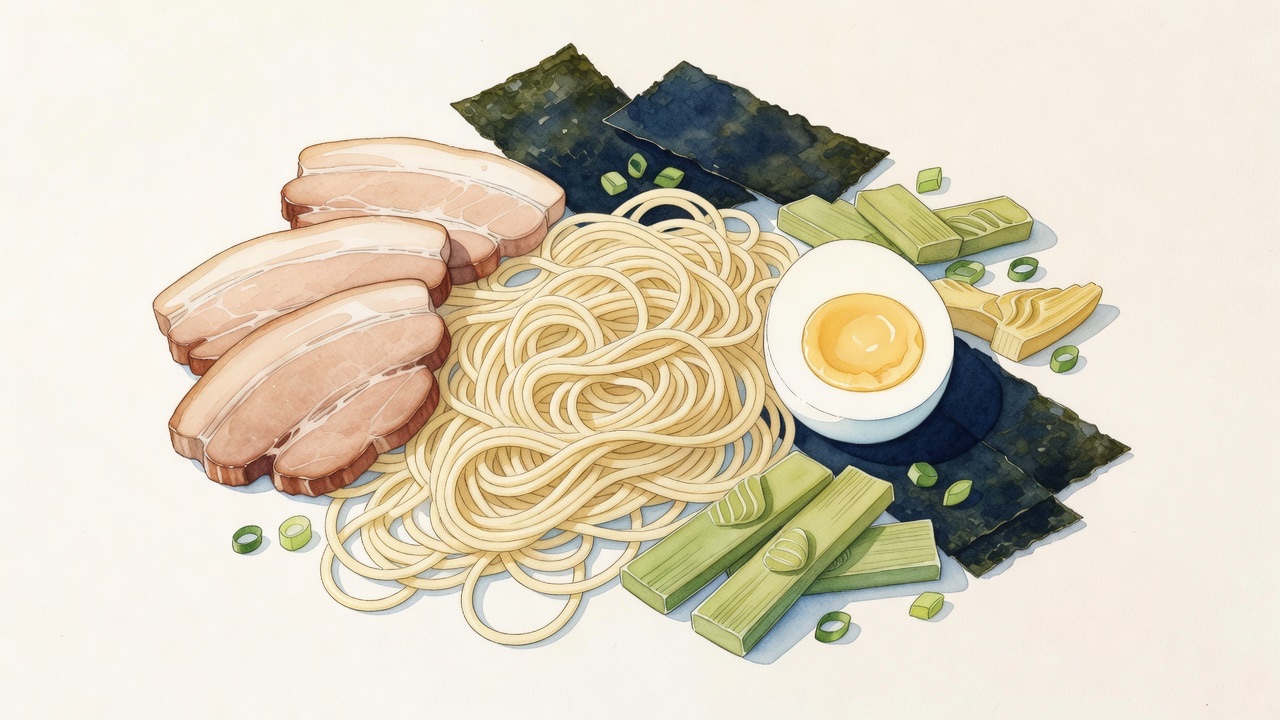
The noodles are the soul of the bowl — not, as many assume, the broth. Great ramen noodles are made with kansui (alkaline water), which gives them their distinctive yellow colour and springy, chewy texture. Thin noodles suit light broths; thicker, wavy noodles hold onto rich tonkotsu. The noodles should be eaten quickly — they continue cooking in the hot broth and turn soft if left too long.
Chashu — Braised Pork (or Chicken)
Chashu is the main protein in most ramen bowls — slow-braised pork belly or shoulder, typically rolled into a log shape and sliced into thick medallions. It should be tender enough to fall apart under gentle pressure, with a sweet-savoury glaze from the braising liquid (usually a mix of soy sauce, mirin, sake, and sugar). High-end shops serve it slightly warm and pink in the centre; budget shops serve it cold and fully cooked through. You can always tell the quality of a shop by its chashu.
Ajitama — The Marinated Soft-Boiled Egg
Also called ajitsuke tamago or ramen egg, this is a soft-boiled egg marinated in soy sauce and mirin until the white is deep amber and the yolk is set but custardy. It should be cut in half before eating to let the yolk run into the broth. It's one of the great pleasures of a ramen bowl and worth ordering as an extra at any shop that does it well.

Menma — Bamboo Shoots
Menma are fermented and seasoned bamboo shoots — crunchy, slightly sweet, and mildly tangy. They provide textural contrast against the soft noodles and tender pork. In high-end bowls, menma is prepared in-house and flavoured with the shop's own seasoning; in budget bowls it comes from a packet. You can tell the difference immediately.
Nori — Dried Seaweed
A sheet of nori (roasted seaweed) is placed upright in the bowl, partly submerged in the broth. As it absorbs liquid, it softens and becomes part of the soup. It adds a gentle ocean flavour and umami depth. Wrap a piece of seaweed around a piece of noodle and some pork for the optimal single bite.
Narutomaki — Fish Cake
The white disc with a pink spiral — recognisable from any ramen cartoon — is narutomaki, a type of kamaboko (fish cake). It has a mild, slightly sweet flavour and chewy texture. It's more common in traditional Tokyo shoyu ramen than in newer styles. Treat it as part of the experience rather than the highlight.
Negi — Spring Onions
Thinly sliced spring onions (negi) are scattered on top of most bowls. They cut through richness, add freshness, and provide colour. Some tonkotsu shops pile them on generously; others use them sparingly. Either way, they're functional, not decorative.
Other Toppings Worth Knowing
- Corn — classic in Sapporo miso ramen; adds sweetness and pop.
- Butter — a pat melted into Hokkaido miso ramen for extra richness.
- Mayu (black garlic oil) — charred garlic oil stirred into Kumamoto tonkotsu; smoky and intense.
- Kikurage (wood ear mushrooms) — standard in tonkotsu bowls; earthy and chewy.
- Moyashi (bean sprouts) — crunchy freshness, common in miso and Sapporo styles.
Planning a Tokyo Ramen Crawl?
Skip the 90-minute tourist lines. Use our free curated walking routes and ticket machine guides to explore neighborhood counters with confidence.
Former Fukuoka tonkotsu ramen apprentice and creator of Japan Ramen Guide. When not exploring Japan's ramen alleys, I build tools for Japan life like Daruma Japan Life and recommend foreigner-friendly housing through Affarah.