Tabelog vs Google Maps in Japan: Which Ratings Should You Trust?
Should you rely on Tabelog's harsh mathematical scoring or Google Maps' crowdsourced simplicity? Here is the ultimate guide to navigating food ratings in Japan.
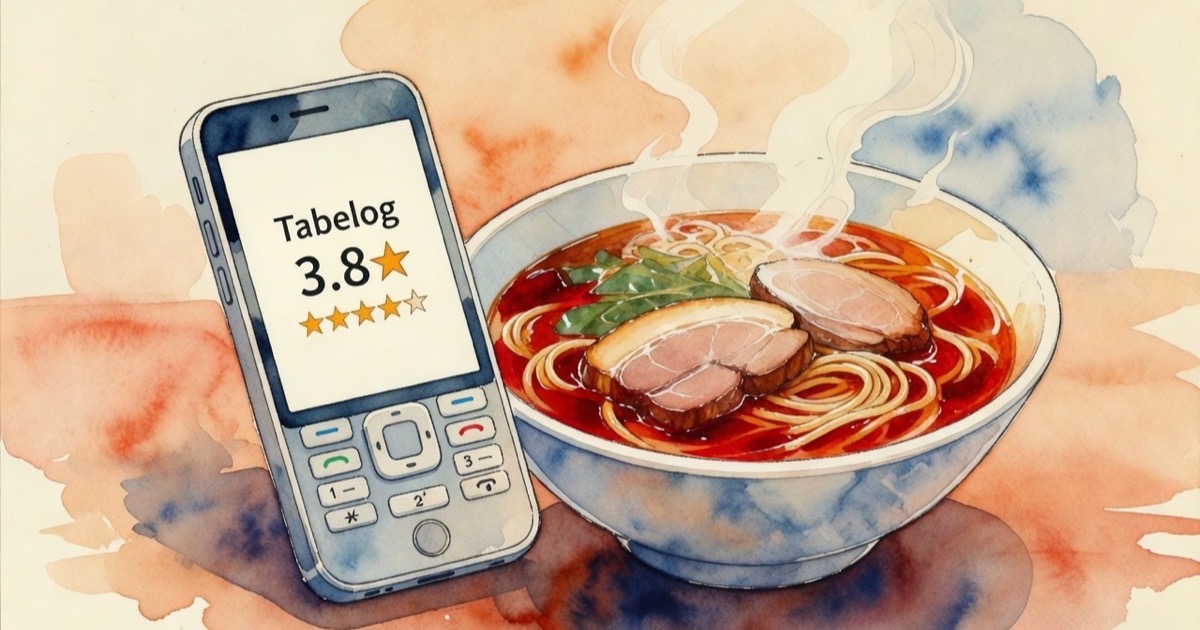
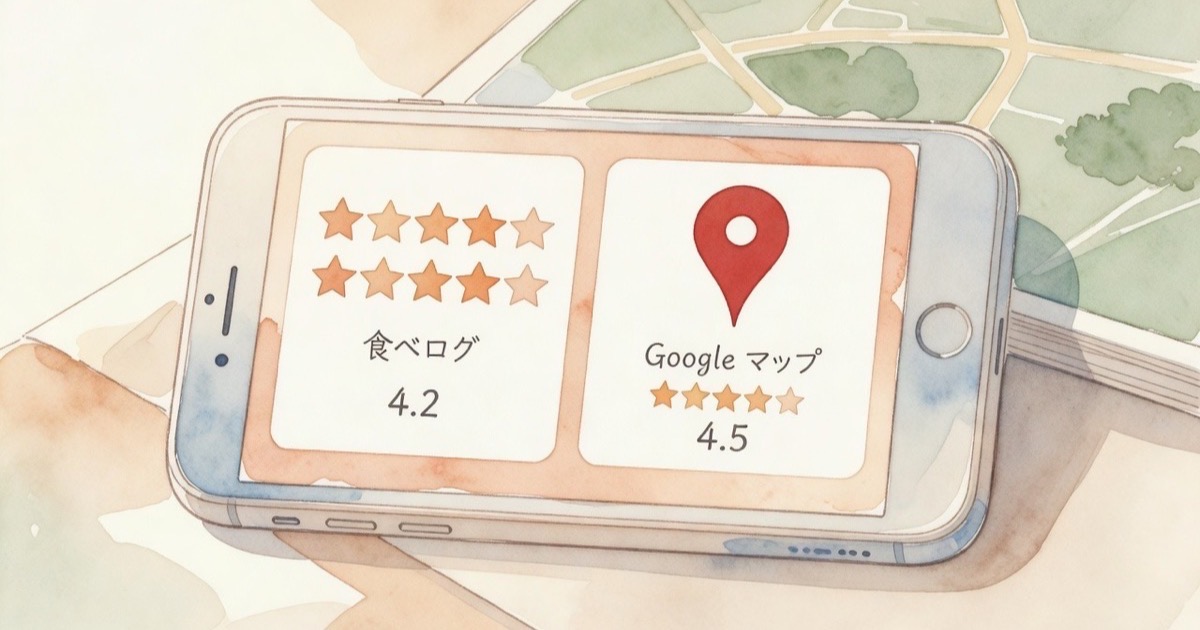
When navigating the bustling culinary landscape of Tokyo, Osaka, or Kyoto, you will likely find yourself toggling between two primary navigation and review platforms: Google Maps and Tabelog. However, you will quickly notice a massive discrepancy between the two. A ramen shop that boasts a stellar 4.6 on Google Maps might only muster a modest 3.12 on Tabelog. So, which platform should you trust? The answer depends entirely on what you are looking for in a dining experience.
Google Maps: The Democratic, International Consensus
Google Maps has become the default search tool for tourists in Japan. Its interface is familiar, translation is seamless, and it is excellent for finding real-time business information. However, its rating system reflects a very different set of values compared to domestic Japanese platforms.
Why Google Maps Ratings Are Inflated
Google Maps reviews are written by a mix of international tourists and locals. Tourists are often in a generous mood, thrilled to be experiencing authentic Japanese food, and will happily leave a 5-star review for a decent but unexceptional bowl of ramen. Additionally, Google Maps ratings are heavily influenced by non-culinary factors. A shop will get high ratings for having English menus, friendly staff, large portions, or being easy to access. While these factors are important for travel comfort, they do not necessarily reflect the absolute quality of the food.
Tabelog: The Domestic, Hyper-Critical Standard
Tabelog is the arena of serious Japanese gourmands. The reviews are almost exclusively written in Japanese, and the standards are notoriously high. On this platform, a restaurant must prove exceptional technical execution to rise above the baseline.
The Focus on Technical Execution
A typical Tabelog reviewer evaluates a bowl of ramen with scientific precision. They will comment on the hydration level of the noodles, the clarity of the soup, the thickness of the oil layer (chiyu), and how well the toppings balance the broth's salinity. They rarely care about English menus, and they certainly will not award extra points for friendly service — they expect high standards of cleanliness and professionalism as a baseline. As a result, Tabelog is a pure measure of culinary quality, uninfluenced by tourist-friendly conveniences.
Tabelog vs Google Maps: Comparison at a Glance
- Average Score Range: Google Maps scores usually run from 3.8 to 4.8. Tabelog scores run from 3.00 to 3.80 (anything above 4.00 is legendary).
- Reviewer Demographics: Google Maps is highly international, skewing towards tourist corridors. Tabelog is predominantly domestic, representing local Japanese tastes.
- Key Rating Factors: Google Maps prioritises accessibility, language friendliness, service, and atmosphere. Tabelog prioritises ingredient quality, culinary balance, technique, and value for money.
- Spam Control: Google Maps is susceptible to review bombing or fake positive reviews. Tabelog uses highly advanced user-influence weighting to eliminate manipulation.
How to Combine Both Tools for the Ultimate Trip
The best strategy is to use the two platforms in tandem. Use Google Maps to verify operating hours (which are updated more frequently than Tabelog) and to check if a shop is permanently closed. Then, cross-reference the shop on Tabelog. If the Tabelog score is 3.25 or higher, you can confidently walk in, knowing you are getting a high-quality bowl that is respected by local diners. If the score is 3.50 or higher, prepare for an elite meal — and a substantial queue.
Browse ranked shops in Tokyo
Mapped list with ratings, stations, and tourist-friendly filters.
Best ramen in TokyoTokyo ramen planning
Explore Tokyo by neighborhood and trip style
Open the full Tokyo guidePlanning a Tokyo Ramen Crawl?
Skip the 90-minute tourist lines. Use our free curated walking routes and ticket machine guides to explore neighborhood counters with confidence.
Former Fukuoka tonkotsu ramen apprentice and creator of Japan Ramen Guide. When not exploring Japan's ramen alleys, I build tools for Japan life like Daruma Japan Life and recommend foreigner-friendly housing through Affarah.