Asahikawa Ramen: The Shoyu Style Born in Japan's Coldest City
Asahikawa ramen is a hearty regional Japanese style celebrated for its deep soy-sauce-based double soup and a protective layer of lard that seals in steam and heat. Discover how this winter-proof bowl is prepared.
Asahikawa ramen is a hearty regional Japanese style celebrated for its deep soy-sauce-based double soup and a protective layer of lard that seals in steam and heat. Born in Hokkaido's coldest city—where winter temperatures regularly plummet below -20°C—this robust bowl is designed to stay piping hot down to the very last spoonful.
The Architecture of a Cold-Weather Bowl
In Asahikawa, ramen is not just a meal; it is a mechanism for survival. The city holds the record for the lowest temperature ever officially recorded in Japan (-41°C in 1902). To keep soup warm while being transported or eaten in freezing, drafty rooms, local chefs developed a brilliant culinary shield: a thick layer of rendered pork fat (lard) floated on top of the broth.
The Lard Seal
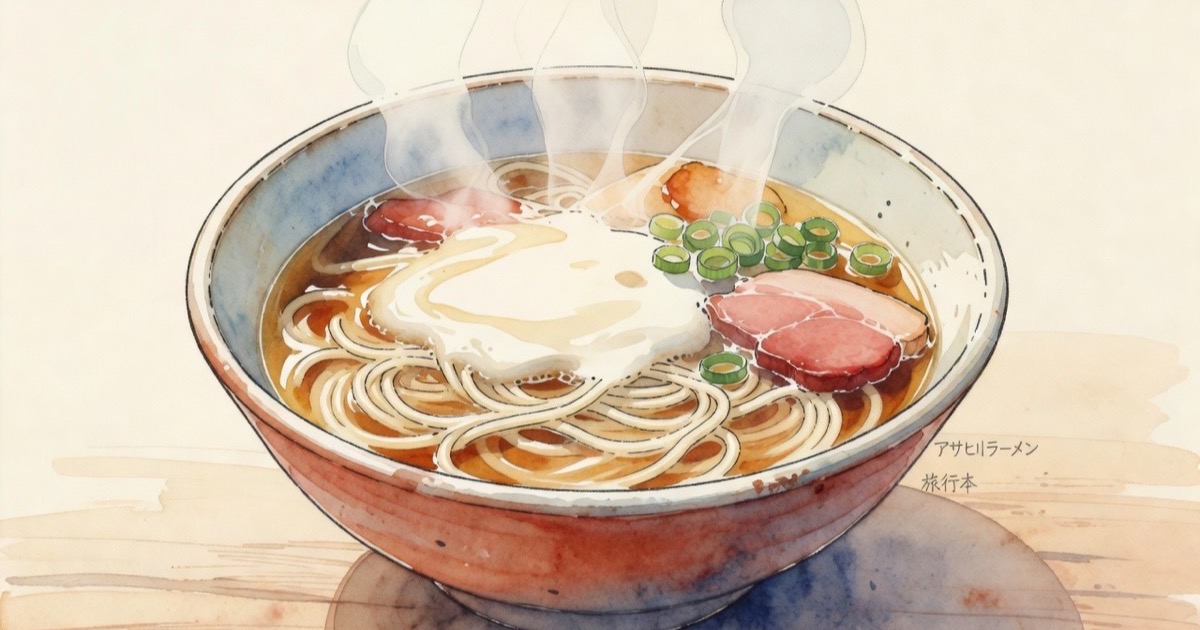
When a bowl of Asahikawa ramen is placed before you, it might appear surprisingly still, with no visible steam rising from the surface. Do not be fooled—this is because the layer of hot lard seals the steam underneath. The moment you break the surface with your chopsticks, a cloud of fragrant, piping-hot steam is released. Be extremely careful with your first sip!
The Double Soup: Sea Meets Land
The broth in Asahikawa is a complex double soup (w-soup). Chefs combine a heavy animal stock—simmered from pork bones, chicken, and occasionally beef—with a seafood dashi brewed from dried sardines (niboshi) and kelp (kombu). This blend is seasoned with a sharp, mature local soy sauce (shoyu). The result is a deeply comforting, oceanic-yet-meaty broth with a rich caramelised soy finish.
Low-Moisture Curly Noodles
The noodles in Asahikawa are another unique feature. They are medium-thick, yellow, and noticeably curly, but their key characteristic is their low moisture content. These thirsty noodles act like a sponge, absorbing the rich shoyu soup and lard as they sit in the bowl, ensuring every bite carries maximum flavour.
Where to Eat in Asahikawa
The city has a dense concentration of historical ramen shops, particularly around the station and the suburbs. Explore the full list of options on our Best Ramen in Asahikawa page or read our Sapporo miso guide to compare Hokkaido's styles.
Frequently Asked Questions
Why does Asahikawa ramen have lard on top?
The lard layer acts as an insulator, keeping the soup piping hot during the freezing Hokkaido winters by preventing heat from escaping through evaporation.
What is the main flavour of Asahikawa ramen?
While miso and shio options exist, the classic signature flavour is a rich, soy-sauce-seasoned double soup of pork and fish.
Browse ranked shops in Hokkaido
Mapped list with ratings, stations, and tourist-friendly filters.
Best ramen in HokkaidoPlanning a Tokyo Ramen Crawl?
Skip the 90-minute tourist lines. Use our free curated walking routes and ticket machine guides to explore neighborhood counters with confidence.
Former Fukuoka tonkotsu ramen apprentice and creator of Japan Ramen Guide. When not exploring Japan's ramen alleys, I build tools for Japan life like Daruma Japan Life and recommend foreigner-friendly housing through Affarah.