Chuka Soba vs Ramen: Why Some Shops Refuse the Word "Ramen"
Why do some of Tokyo's most celebrated modern noodle shops label their dishes as 'Chuka Soba' or 'Soba House'? Explore the fascinating history and stylistic nuances behind the terms.
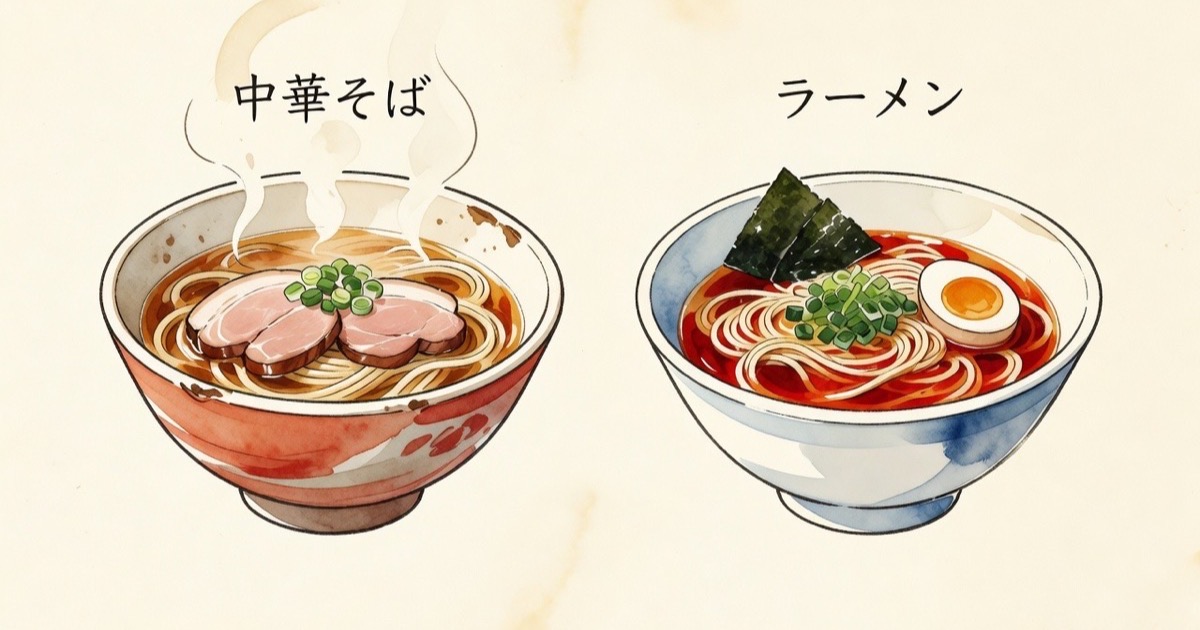
When exploring the culinary landscape of Tokyo, you will notice something peculiar. Some of the city's highest-rated, most exclusive noodle shops — including Michelin-starred icons — do not have the word 'Ramen' anywhere on their signboards. Instead, they proudly advertise Chuka Soba (中華そば) or call themselves a 'Soba House'. Understanding this distinction is key to navigating the deeper layers of Japanese food culture.
A History of Names: From Nanjing to China
To understand why this linguistic division exists, we have to look back to the late 19th and early 20th centuries, when Chinese merchants and port workers introduced wheat-based, alkaline-water noodles to Japan. Because the dish was associated with Chinese ports, it was initially referred to as Nankin Soba (Nanjing buckwheat noodles) — even though the noodles contained no buckwheat.
As the dish spread nationwide, the name shifted to Shina Soba (Chinese noodles). Following the Second World War, the term 'Shina' acquired negative connotations. In response, restaurants and the public adopted the more respectful term Chuka Soba (literally 'Chinese-style buckwheat noodles'). This remained the standard, polite term for decades, evoking a clean, nostalgic bowl of clear soy-sauce soup.
The Rise of 'Ramen'
The word 'Ramen' is actually a modern newcomer. It was popularised in 1958 with the launch of Nissin's revolutionary Chikin Ramen (instant noodles). The word itself is the Japanese phonetic pronunciation of the Chinese term la mian (pulled noodles). By the 1980s, as heavy pork-bone tonkotsu and rich miso variants triggered a nationwide boom, 'Ramen' became the dominant global word, associated with bold, heavy, and sometimes greasy comfort food.
Why Artisans Prefer 'Chuka Soba'
In the modern era, the choice of terminology is highly intentional. When a master chef chooses to label their dish as 'Chuka Soba' rather than 'Ramen', they are signaling a specific aesthetic and culinary philosophy. Here is what that choice implies:
- Nostalgia and Tradition — It evokes the classic, clean post-war Tokyo style. It is a nod to heritage rather than modern fast-food trends.
- Dashi-Forward Broths — Chuka soba is almost always clear (chintan), built on chicken carcasses, dried sardines (niboshi), and kelp (kombu), rather than emulsified pork bones.
- Artisanal Focus — The term 'soba' elevates the noodles, suggesting they are crafted with the same precision and local wheat flours as traditional buckwheat soba.
Tokyo's Ultimate Chuka Soba Destinations
Many of Tokyo's most legendary shops embrace this traditional terminology. For example, Chuka Soba Shibata in western Tokyo is renowned for its soy-forward clarity, while the Michelin-laureled SOBA HOUSE Konjiki Hototogisu Shinjuku Gyoen Honten utilizes clam and truffle dashi to redefine what 'soba' can be. You can also seek out specialized bowls like Shinjiko Shijimi Chuka Soba Kohaku Tokyo Honten (which highlights freshwater clams) or Oyadori Chuka Soba Ayagawa Honten.
Browse ranked shops in Tokyo
Mapped list with ratings, stations, and tourist-friendly filters.
Best ramen in TokyoTokyo ramen planning
Explore Tokyo by neighborhood and trip style
Open the full Tokyo guidePlanning a Tokyo Ramen Crawl?
Skip the 90-minute tourist lines. Use our free curated walking routes and ticket machine guides to explore neighborhood counters with confidence.
Former Fukuoka tonkotsu ramen apprentice and creator of Japan Ramen Guide. When not exploring Japan's ramen alleys, I build tools for Japan life like Daruma Japan Life and recommend foreigner-friendly housing through Affarah.