No English, No Problem: How to Order Ramen at Any Shop in Japan
The best ramen shops often have no English menu, no English signs, and staff who don't speak English. Here's a practical field guide for navigating exactly that situation.
The greatest ramen shops in Japan are usually small, owner-operated, and entirely Japanese-language. This is not an accident — the chefs running them are focused on the bowl, not the tourist market. And this is exactly why you should eat at them. Here's everything you need to do it confidently.
A practical guide to ordering ramen in Japan without knowing Japanese
The Three Scenarios You'll Face
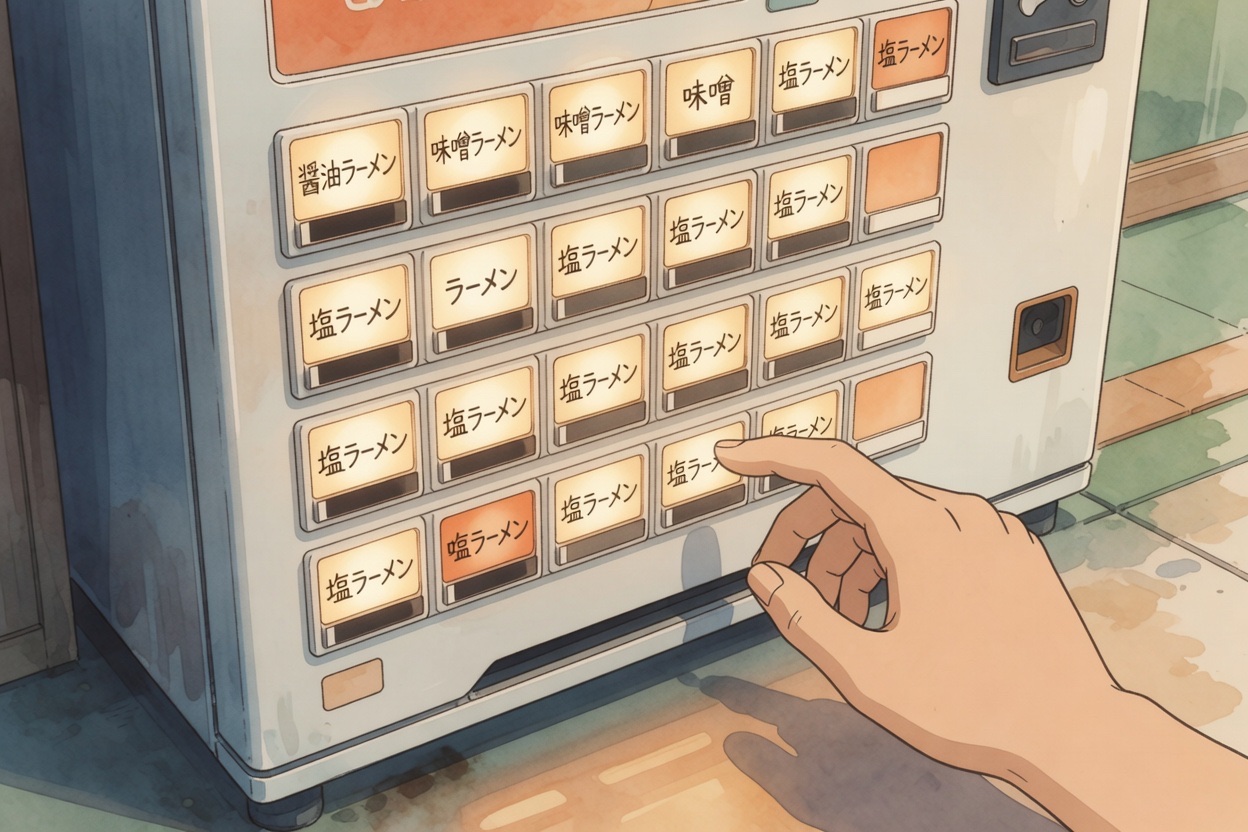
Scenario 1: Ticket Machine at the Entrance
The ticket machine is actually the easiest scenario for non-Japanese speakers. The buttons have images on many modern machines, or the staff will point at the right button when they see you hesitate. Insert a ¥1,000 note, press the most highlighted button (almost always the signature bowl), take your ticket and change.
Scenario 2: Verbal Ordering at the Counter
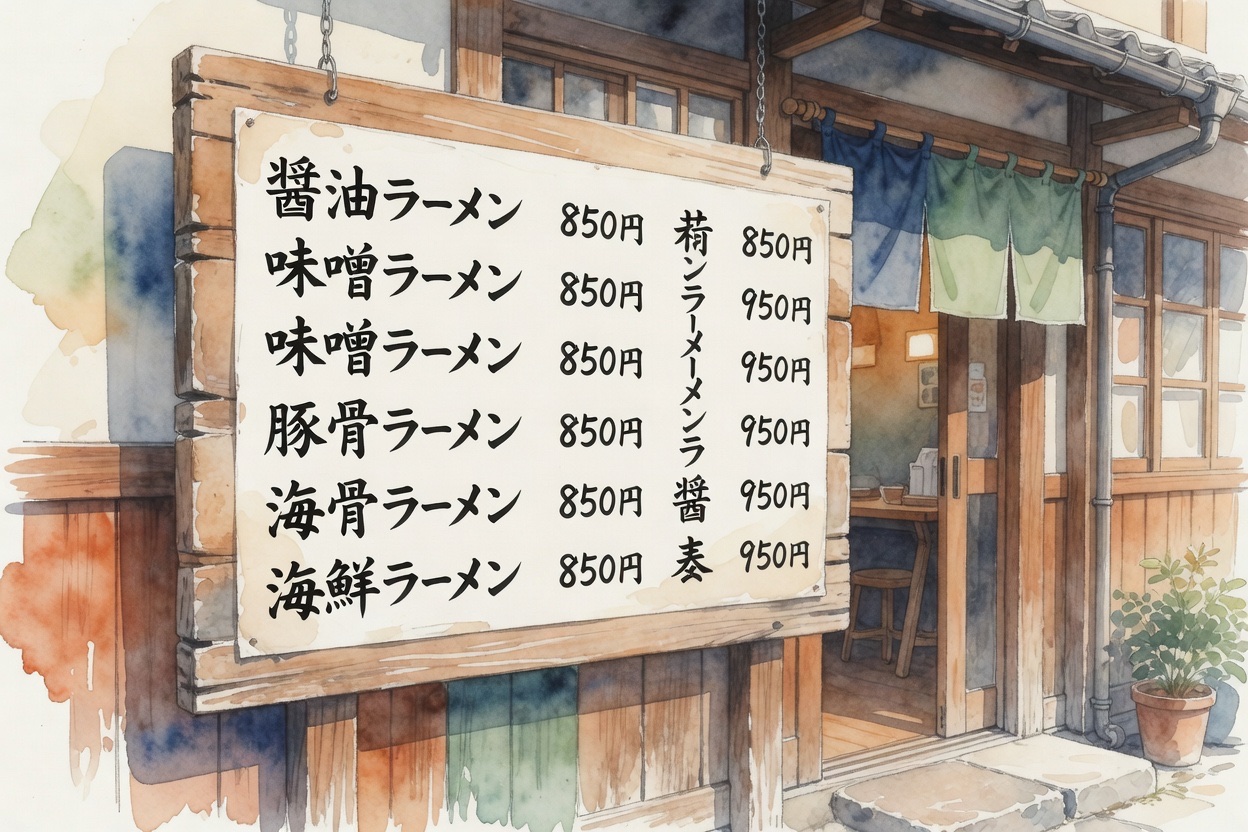
When a staff member comes to take your order, point at the item on the menu and say kore onegaishimasu (これおねがいします — 'this one, please'). If there are size options, hold up one finger for regular (一つ, hitotsu) or two for large (大盛り, ōmori). The staff member will confirm by repeating the order — nod yes.
Scenario 3: The Single-Item Shop
Some legendary shops serve one thing in one size. There is no menu. You sit down, a bowl appears. This is the easiest scenario of all: do nothing, eat everything.
Essential Phrases
- Sumimasen (すみません) — 'Excuse me' / general attention-getter.
- Kore onegaishimasu (これおねがいします) — 'This one, please' (while pointing).
- Ōmori de onegaishimasu (大盛りでおねがいします) — 'Large serving, please.'
- Nami de onegaishimasu (並でおねがいします) — 'Regular serving, please.'
- Ikura desu ka? (いくらですか?) — 'How much is it?'
- Gochisousama deshita (ごちそうさまでした) — 'Thank you for the meal' (said when leaving).
Tech Tools
- Google Translate (camera mode): Point your phone at any text for an instant overlay translation. Handles most ramen menus reliably.
- Google Maps Photos: Many shops have user-submitted photos of their menu items. Screenshot these before visiting — you can match items without needing the translation.
- Japan Ramen Guide shop pages: Each shop on our site shows the name in English and Japanese — show the Japanese version to the taxi or konbini staff if you need directions.
What Not to Worry About
Japanese hospitality (omotenashi) is deeply ingrained. Staff at ramen shops deal with confused tourists more often than you might think, especially in Tokyo. If you're struggling, a genuine look of uncertainty and a polite bow will almost always prompt a staff member to help you — often by literally pressing the right button on the machine or pointing at the correct item on the menu.
The language barrier is smaller than it seems and shrinks to nothing once you've done it once. Go to the shop with the no-English sign. The bowl will be worth it.
Planning a Tokyo Ramen Crawl?
Skip the 90-minute tourist lines. Use our free curated walking routes and ticket machine guides to explore neighborhood counters with confidence.
Former Fukuoka tonkotsu ramen apprentice and creator of Japan Ramen Guide. When not exploring Japan's ramen alleys, I build tools for Japan life like Daruma Japan Life and recommend foreigner-friendly housing through Affarah.