Ramen vs Udon vs Soba: What's the Difference and Which Should You Try First?
Japan has three great noodle dishes. Each uses different noodles, different broths, and fills a different role in Japanese food culture. Here's how to tell them apart and decide where to start.
If you're planning a trip to Japan and you want to eat well, you'll encounter ramen, udon, and soba within your first twenty-four hours. They're all noodle dishes served in broth, but they're quite different in flavour, texture, price, and cultural context. Understanding the basics before you arrive means fewer decision-paralysis moments staring at a menu you can't read.
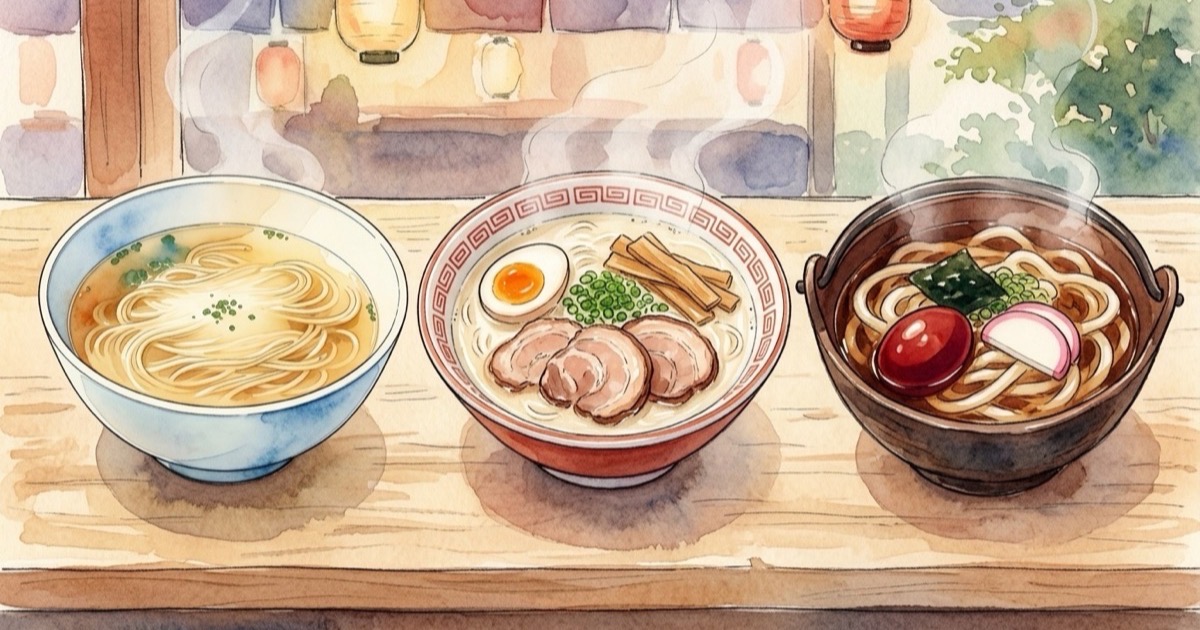
Comparing Japan's three primary noodle types: Ramen, Udon, and Soba
The Noodles
Ramen noodles
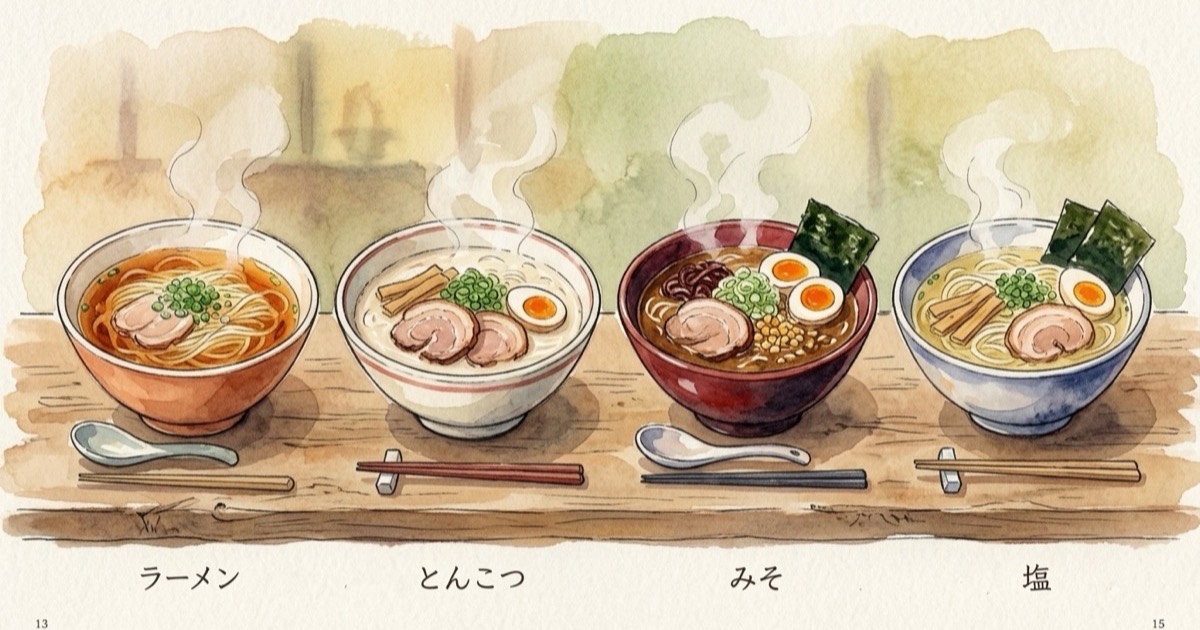
Made from wheat flour, water, salt, and kansui (an alkaline mineral solution). The alkaline treatment gives them their springy, elastic texture and slight yellow colour. They range from thin and straight (Hakata tonkotsu) to thick and wavy (Sapporo miso). They hold up well in rich, hot broths.
Udon noodles
Also made from wheat flour, but without the alkaline agent. Udon noodles are thick — often finger-width — white, and soft with a chewy bounce. They have a mild flavour that lets the broth shine. Sanuki udon from Kagawa Prefecture is considered the gold standard.
Soba noodles
Made from buckwheat flour (usually blended with some wheat for structure). Thin, grey-brown, and nutty in flavour. Soba can be served hot (kake soba) in a light dashi broth, or cold (zaru soba) with a dipping sauce. Cold soba is one of Japan's most refreshing summer dishes.
The Broths
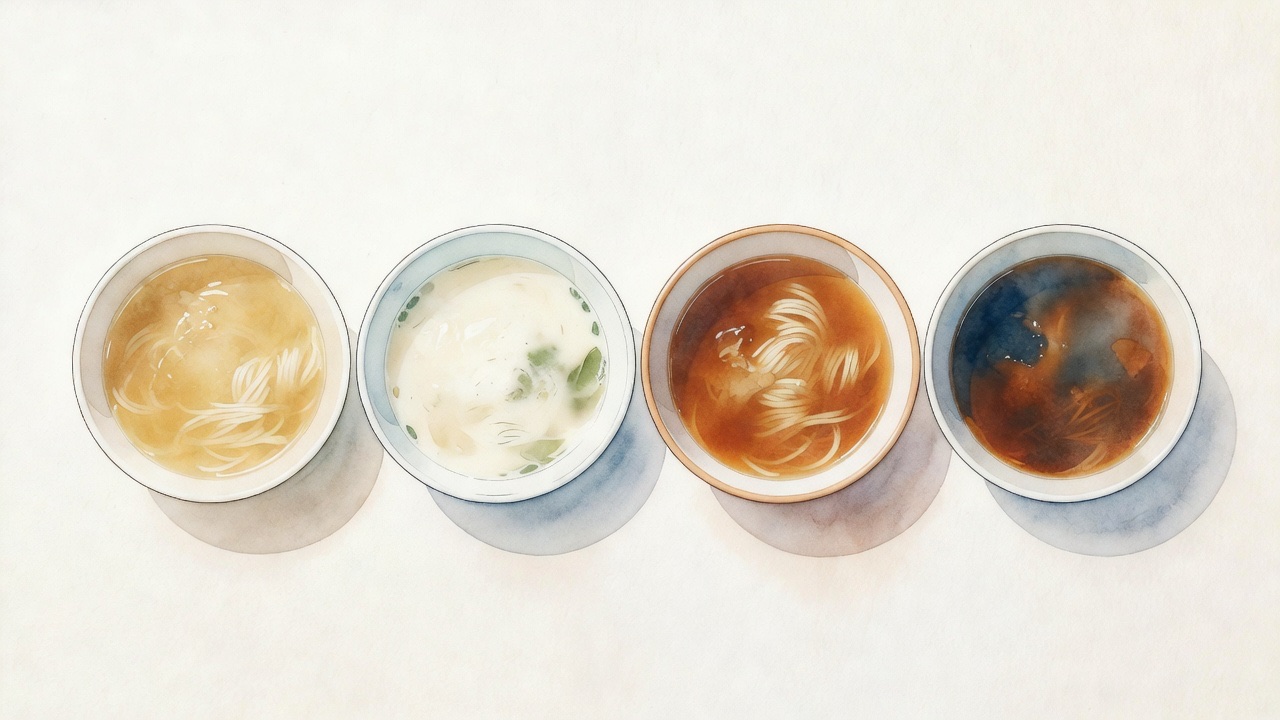
Ramen broth varies enormously by style — from delicate shio to intense tonkotsu — and is the main event of the dish. It's typically richer and more complex than the other two. Udon broth is usually a light, golden dashi (kombu and bonito) seasoned with soy and mirin — clean and sweet. Soba broth (mentsuyu) is similar but slightly stronger, designed to be a dipping vehicle rather than a soup.
Price and Setting
- Ramen: ¥900–¥1,500 at a sit-down ramen shop. Eaten at the counter, often solo, with full attention on the bowl.
- Udon: ¥400–¥900. Udon can be extremely cheap at chain restaurants (Marugame Seimen, Hanamaru). More casual and family-friendly.
- Soba: ¥700–¥2,000+. Quality soba at a dedicated soba-ya can be expensive and refined — a very different experience from conveyor-belt udon.
Which to Try First?
Try ramen first — it's the most distinctive, the most varied, and the dish where Japan has done the most creative work. If you have a rich-food tolerance, start with tonkotsu. If you prefer lighter flavours, shio or shoyu. Read our guide to choosing a ramen style for a decision tree based on what you already know you like.
Try udon on day two or three — ideally at a good Sanuki udon chain or a dedicated udon-ya. Try cold soba on a hot day or as a light lunch between heavier meals. All three are worth eating. But start with ramen.
Planning a Tokyo Ramen Crawl?
Skip the 90-minute tourist lines. Use our free curated walking routes and ticket machine guides to explore neighborhood counters with confidence.
Former Fukuoka tonkotsu ramen apprentice and creator of Japan Ramen Guide. When not exploring Japan's ramen alleys, I build tools for Japan life like Daruma Japan Life and recommend foreigner-friendly housing through Affarah.