What Is Ramen? Japan's National Dish Explained From Scratch
Four broths, five noodle types, sixteen regional styles — and every bowl reflects a different set of trade-offs. Here's how to understand what you're actually eating when you sit down in a Japanese ramen shop.
Ramen is a Japanese noodle dish served in broth, topped with ingredients that vary by region, season, and chef. That sentence is technically accurate and completely fails to capture why people queue for ninety minutes in the rain to eat it. The real answer is that ramen is one of the most obsessively refined dishes on the planet — a dish where the broth might simmer for eighteen hours, the noodles are alkaline-treated to achieve a specific chew, and the chashu pork is braised to a texture that dissolves at room temperature.
If you've only had instant ramen, you've had the sketch, not the painting. If you've had ramen from a good restaurant outside Japan, you've had a translation. The original — eaten in the country that perfected it — is something else.
An introduction to Japan's rich ramen culture and main broth styles
The Four Broth Bases
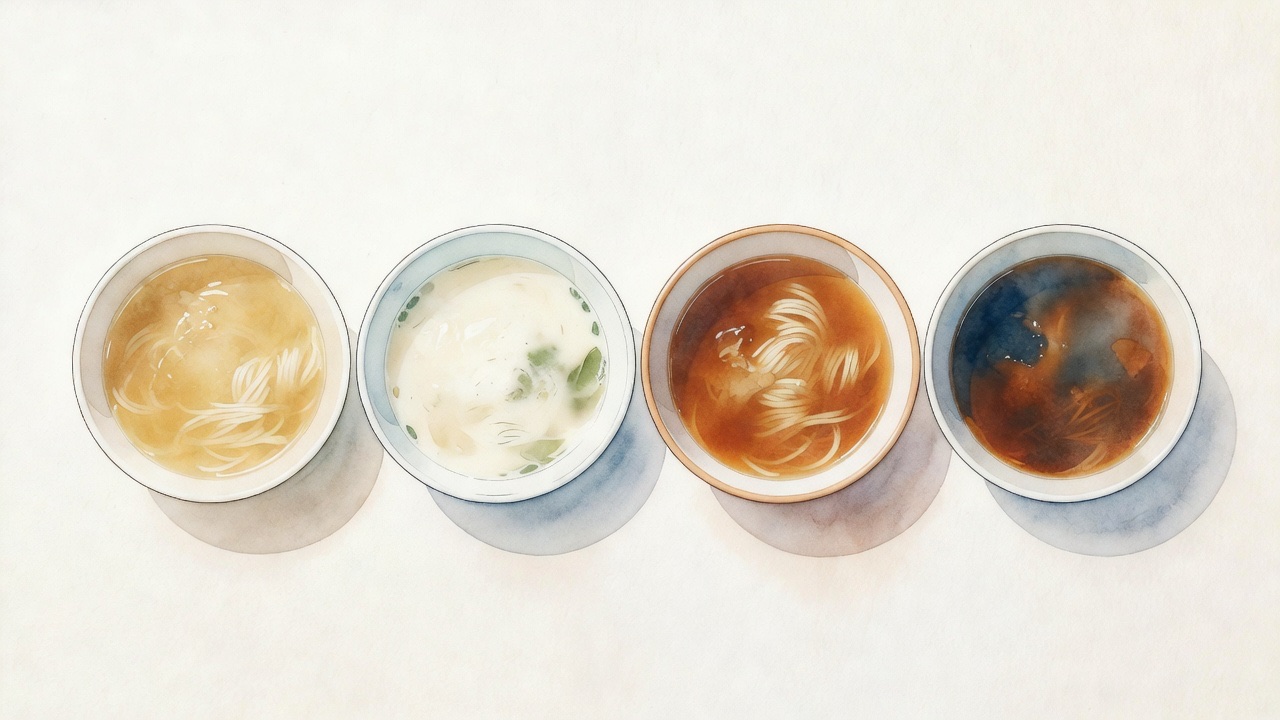
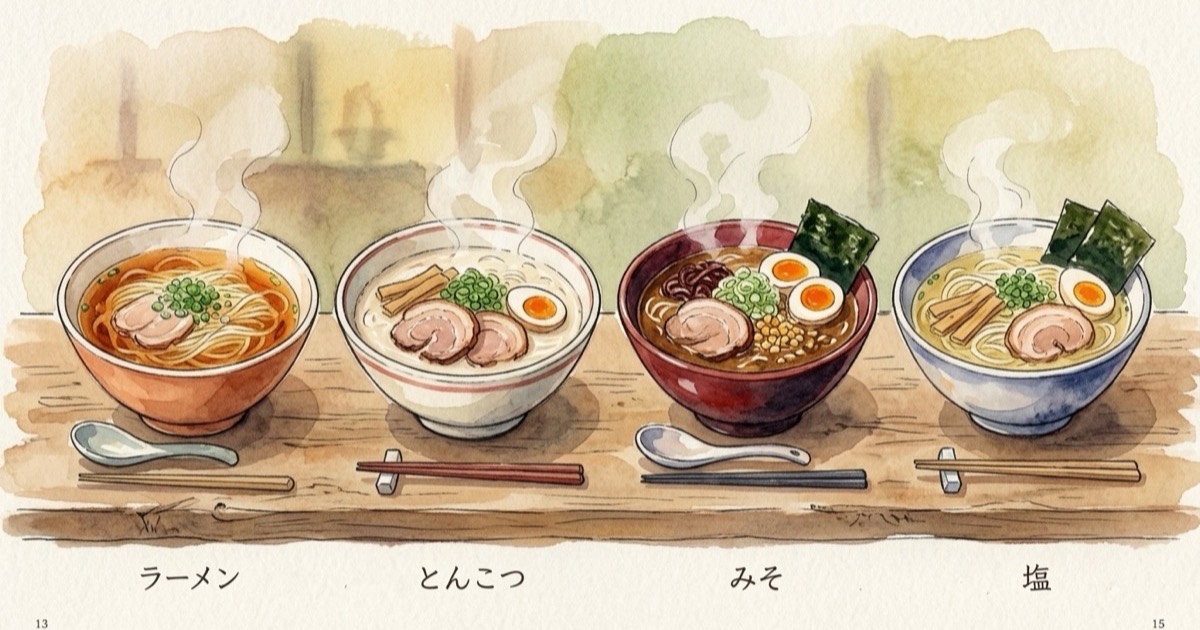
Almost every bowl of ramen is built on one of four broth styles. Understanding these four is the single most useful thing you can do before your first trip.
Shoyu (Soy Sauce)
Shoyu ramen has a clear-to-amber broth built on a chicken or dashi base, seasoned with soy sauce tare. It's the most historically significant style — the original Tokyo ramen, developed in the early twentieth century. The broth is lighter than tonkotsu but deeply savoury. You can see through it, which is a useful visual cue. Thin, straight, or slightly wavy noodles are typical.
Tonkotsu (Pork Bone)
Tonkotsu is the internationally famous one: an opaque white broth made by boiling pork bones at a rolling boil until the collagen emulsifies into a rich, creamy liquid. It originated in Fukuoka and remains the defining ramen of Kyushu. The broth is fatty, intense, and filling. Thin straight noodles are almost universal. If you only try one style, tonkotsu is the most dramatic introduction to what ramen can be.
Miso
Miso ramen was developed in Sapporo in the 1950s and remains most associated with Hokkaido. The broth uses a miso tare mixed into a pork or chicken base, creating something thick, earthy, and slightly sweet. It's the warmest of the four styles — the one that makes the most sense in a cold climate. Corn, butter, and bean sprouts are classic Sapporo toppings.
Shio (Salt)
Shio is the most delicate style. A salt-based tare seasons a clear broth — often chicken, sometimes seafood — that showcases the quality of the stock rather than masking it. Shio ramen is what serious ramen chefs often choose to demonstrate technique, because there's nowhere to hide. Raa Menya Shima in Shinjuku is one of Tokyo's most acclaimed shio specialists.
Noodles
Ramen noodles are made from wheat flour, water, salt, and an alkaline agent — traditionally kansui (a mineral water solution), which gives them their characteristic springy texture and faint yellow colour. Beyond that, everything varies: thickness, waviness, hydration level, and freshness. A shop's noodles are often as carefully chosen as its broth. Read more in our complete guide to ramen noodle types.
Toppings
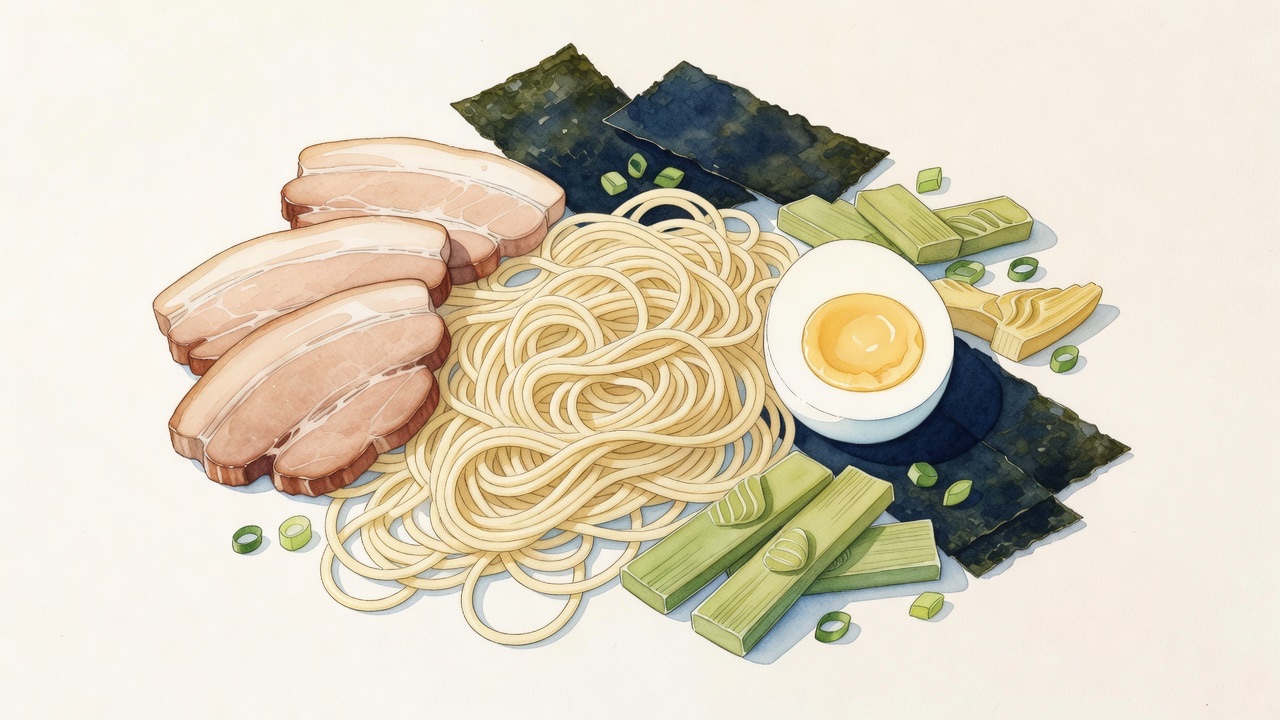
The toppings in a bowl of ramen aren't decoration — they're structural. Chashu pork (braised or roasted) adds richness. Ajitsuke tamago (marinated soft-boiled egg) adds salt and fat contrast. Menma (bamboo shoots) add texture. Nori soaks up broth. Narutomaki (fish cake) and spring onions finish the picture. A full breakdown is in our ramen toppings guide.
Why Japan?
Ramen exists in many countries, but the Japanese version occupies a different category. The level of craft applied — the sourcing of specific chicken breeds for stock, the precision of noodle hydration, the years of training required to run a serious shop — is extraordinary. The reasons ramen tastes better in Japan go well beyond ingredients.
How to Choose
If you're not sure where to start, our guide to choosing a ramen style walks through the decision based on what you already know you like. And once you've chosen, how to actually order covers the ticket machine, customisation forms, and counter etiquette.
Planning a Tokyo Ramen Crawl?
Skip the 90-minute tourist lines. Use our free curated walking routes and ticket machine guides to explore neighborhood counters with confidence.
Former Fukuoka tonkotsu ramen apprentice and creator of Japan Ramen Guide. When not exploring Japan's ramen alleys, I build tools for Japan life like Daruma Japan Life and recommend foreigner-friendly housing through Affarah.