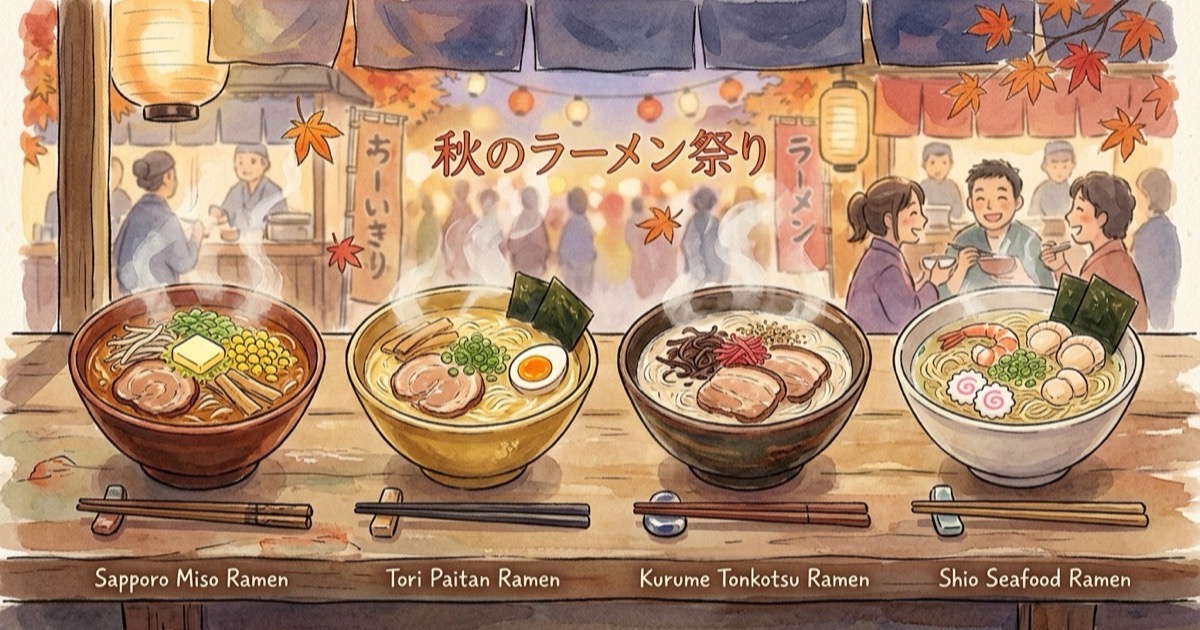
The 12 Regional Bowls of Tokyo Ramen Festa 2026: Complete Vendor Breakdown
A deep dive into all 12 booths at Tokyo Ramen Festa 2026: Sapporo jidori miso, Kurume yobimodoshi tonkotsu, Shonai sea bream, and Michelin collaboration broths.
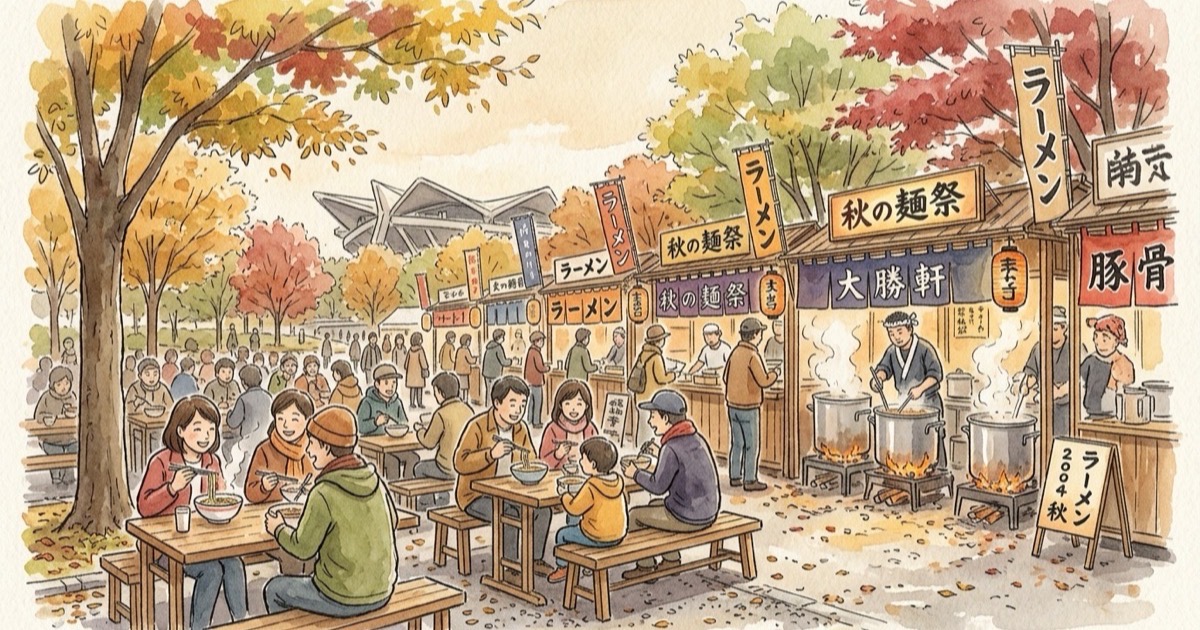
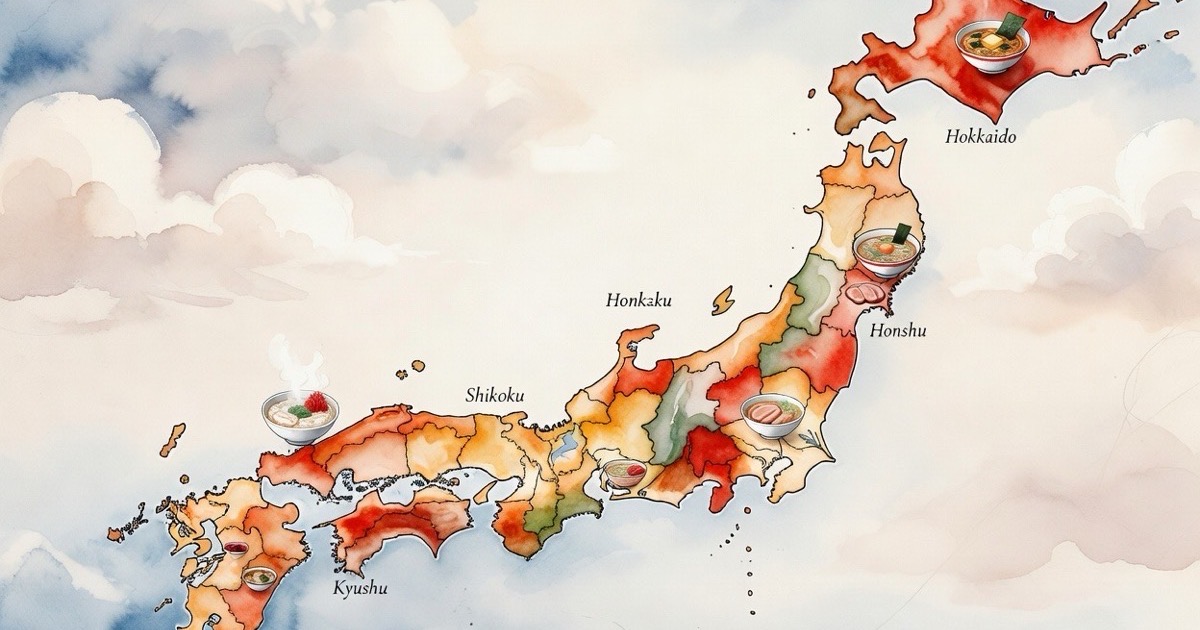
The true appeal of Tokyo Ramen Festa 2026 is geographical efficiency. On a standard trip across Japan, tasting authentic Kurume tonkotsu, Yamagata cold-chicken tare, and Sapporo free-range miso requires thousands of kilometers on the shinkansen. At Komazawa Olympic Park from October 30 to November 3, 2026, twelve regional masters set up their cauldrons side by side.
The 12 Festival Bowls Analyzed by Region
Here is the exact culinary breakdown of every bowl cooking at Tokyo Ramen Festa 2026:
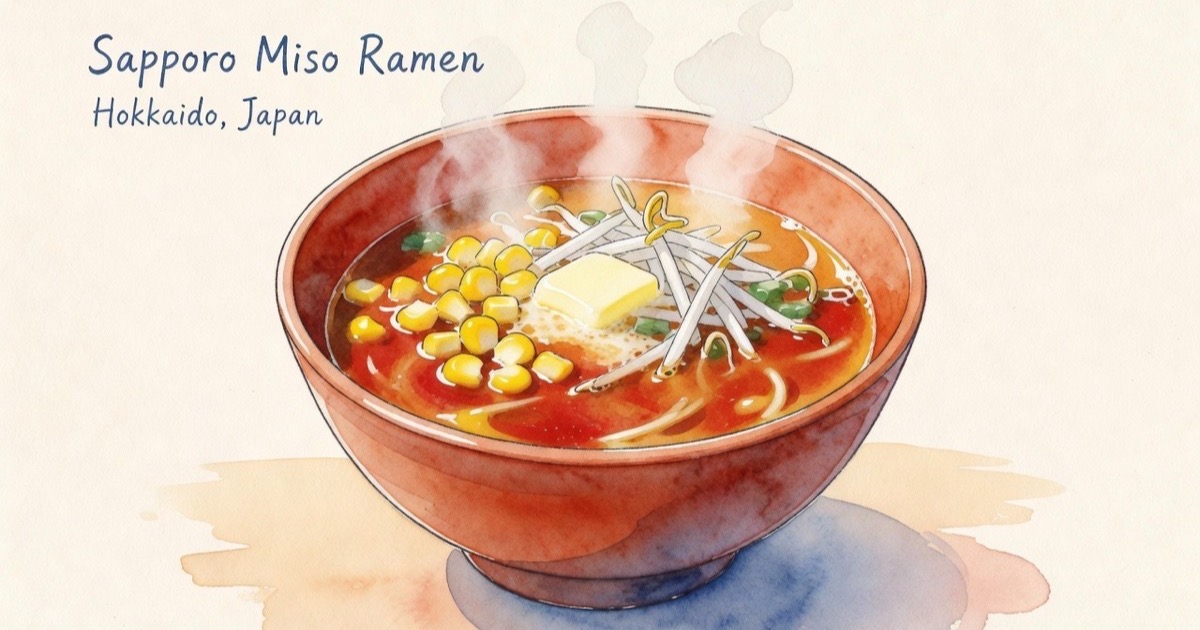
Booth 1 | Sapporo: Menya Nanabei (麺屋菜々兵衛)
Bowl: Sapporo Miso Ramen with Premium Free-Range Chicken Broth
Unlike tourist-heavy Sapporo miso bowls drowned in heavy pork lard, Menya Nanabei (a top-rated landmark in Shiroishi Ward, Sapporo) builds its base on slow-simmered domestic free-range chicken stock (jidori). The delicate chicken fat softens fermented Hokkaido miso, yielding an aromatic, silky soup paired with bouncy yellow wavy noodles.
Booth 2 | Yamagata: Shinshunya Honten (新旬屋本店)
Bowl: Golden Chicken Chinese Final Special (金の鶏中華 ファイナルスペシャル)
Hailing from Shinjo City in Yamagata Prefecture (Japan's highest-consumption ramen region), Shinshunya Honten creates a masterclass in chicken fat layering. Five distinct preparations of chicken meat, rendered chicken skin oil, seasoned mince, and amber soy sauce create a gleaming golden broth that coats every strand of curly wheat noodles.
Booth 3 | Kurume: Ramen Kurume Honda Shoten (拉麺 久留米 本田商店)
Bowl: Original Tonkotsu! Rich and Aged Yobimodoshi Kurume Ramen
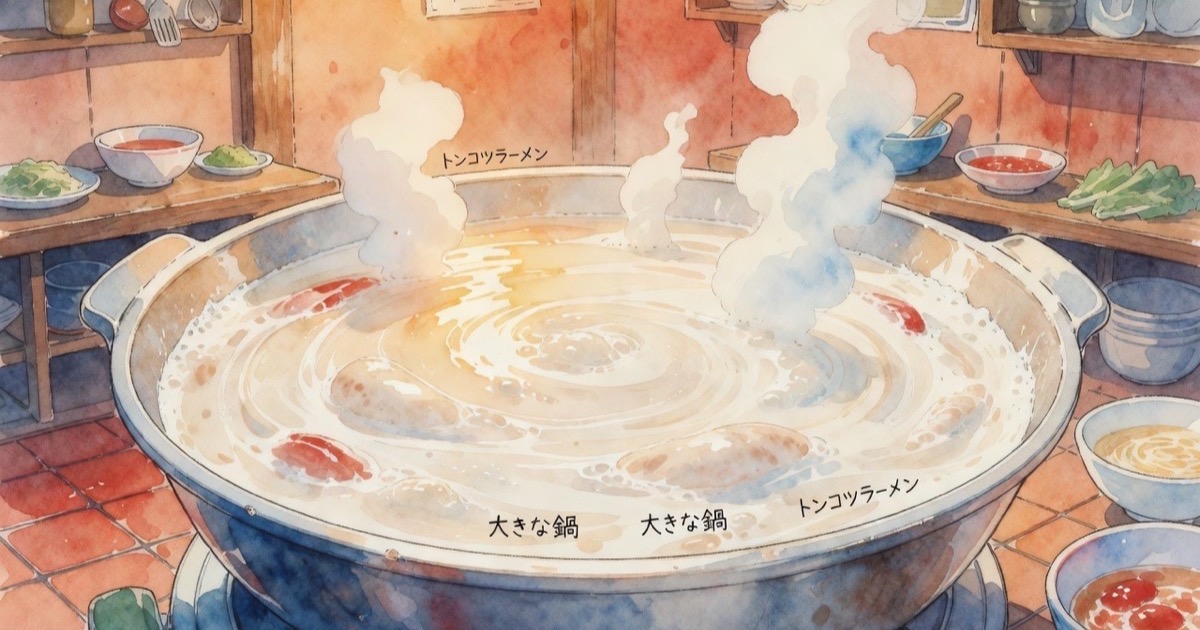
Kurume in Fukuoka Prefecture is the birthplace of pork-bone ramen. Ramen Kurume Honda Shoten preserves the ancient yobimodoshi (calling back) brewing method: kitchen cauldrons are never emptied to zero, but continuously replenished with fresh bones, water, and mature stock day after day. The resulting broth is pungent, bone-marrow heavy, deeply savory, and clings tenaciously to firm straight thin noodles.
Booth 4 | Collab: Shinshu Toripaitan Kimuzukashiya × Honkare Chuka Soba Gyora
Bowl: Shinshu Rich Chicken Broth Ramen (信州濃厚鶏白湯ラーメン)
A powerhouse collaborative effort between Nagano's chicken paitan pioneer Kimuzukashiya and Tokyo's siphon-extracted katsuo dashi specialist Honkare Chuka Soba Gyora. Rich chicken collagen boiled down for hours provides creamy body, cut through with the sharp, clean aroma of premium dried bonito.
Booth 5 | Okayama: Mendokoro Guritora (麺処ぐり虎)
Bowl: Ultimate Chicken Salt Ramen with Local Chicken and Setouchi Dried Sardines
Mendokoro Guritora combines rich free-range chicken bones with fragrant sun-dried sardines (iriko) hauled directly from the Seto Inland Sea. The crystal-clear shio broth provides a refreshing coastal balance to the richer meat broths at the festival. You can also sample their craft at their permanent shop in our directory (Mendokoro Guritora Nagoya Sakae).
Booth 6 | Collab: Chuka Soba Mitsufuji × Niboshi Soba & Tori Soba Ai
Bowl: Scallop and Local Chicken Soy Sauce Ramen (帆立と地鶏の醬油そば)
An east-meets-west collaboration between two Michelin Bib Gourmand recipients: Chuka Soba Mitsufuji from Midorigaoka, Tokyo, and Tori Soba Ai from Sakyo Ward, Kyoto. Sweet dried Hokkaido scallops pair with regional jidori chicken bones to produce an elegant, perfume-like shoyu broth.
Booth 7 | Collab: Aizu Collaboration (Hirofumi Yamaguchi × Aizuna × Iwaiya)
Bowl: Aizu Kitakata Ramen Made with Aizu Local Chicken
Three masters with deep roots in Aizu-Wakamatsu join forces to showcase Fukushima's noodle heritage, led by Hirofumi Yamaguchi of Tokyo's acclaimed Ramen Yamaguchi alongside Kitakata's Nidaime Iwaiya. High-moisture, thick hand-crimped flat noodles float in a crystal-clear soy broth enriched by precious Aizu jidori chicken fat and tender simmered pork belly.
Booth 8 | Ibaraki: Dragon Ramen (ドラゴンラーメン)
Bowl: Okukuji Shamo Rich Chicken Soba (奥久慈しゃもの濃厚鶏そば)
Shimotsuma City's Dragon Ramen highlights Ibaraki Prefecture's prized Okukuji Shamo gamecock. Shamo birds are raised free-range in mountain pastures, producing a lean, muscular meat with an intensely gamey, mineral-rich chicken broth that stands apart from standard broiler chicken paitan.
Booth 9 | Nagoya: Mensho Saidori (麺匠彩どり.)
Bowl: Purebred Nagoya Cochin Shio Ramen (純系名古屋コーチン汐らぁ麺)
Nagoya Cochin is Japan's most famous heritage chicken breed, prized for reddish meat and rich golden fat. Mensho Saidori simmers 100% purebred Cochin bones with sea salt to create an unblemished, shimmering shio bowl that lets the natural poultry sweetness shine.
Booth 10 | Yamagata: Chuka Soba Kumo no Ito (中華そば雲ノ糸)
Bowl: Shonai Sea Bream Ramen (庄内鯛の中華そば)
Hailing from Yamagata, Kumo no Ito is a celebrated fixture in our ramen directory (Chuka Soba Kumo no Ito Akanegaoka, Sakata Honten, and Kumo no Ito Mogamigawa). For Tokyo Ramen Festa, they extract deep marine umami from fresh Shonai red sea bream (tai) heads and roasted bones, finished with fragrant white soy sauce.
Booth 11 | Osaka: Ramen Makotoya (ラーメンまこと屋)
Bowl: Beef White Broth Ramen (牛白湯ラーメン)
While most white broths in Japan use pork or chicken, Osaka's Ramen Makotoya specializes in gyu-paitan. Beef bones and marrow are boiled under intense pressure until emulsified into a creamy, milk-white soup that clings to thin, firm noodles like a savory veloute.
Booth 12 | Osaka: Kingemon (金久右衛門)
Bowl: Golden Chinese Noodles with Rausu Kelp and Clams (羅臼昆布とシジミの黄金中華そば)
Kingemon from Fukaebashi, Osaka has won the Kansai King of Ramen tournament multiple times. Their festival entry combines Hokkaido's sweet Rausu kombu with the briny, amber depth of freshwater shijimi clams, topped with light soy seasoning for a clean, restorative finish.
Where to Visit the Masters Beyond the Festival
If you fall in love with a bowl at the festival, plan a visit to their permanent flagship shops across Japan:
| Booth | Shop | City / Prefecture | Notable Feature |
|---|---|---|---|
| 1 | Menya Nanabei | Sapporo, Hokkaido | Shiroishi Ward flagship, Michelin Guide recommended |
| 2 | Shinshunya Honten | Shinjo, Yamagata | Originator of Golden Chicken Chinese noodles |
| 3 | Honda Shoten | Kurume, Fukuoka | Original Kurume yobimodoshi cauldron method |
| 4 | Kimuzukashiya / Gyora | Nagano & Tokyo | Toripaitan pioneer and siphon dashi counter |
| 5 | Mendokoro Guritora | Okayama & Nagoya | Okayama flagship & Nagoya branch (#587); Setouchi sardine dashi |
| 6 | Mitsufuji / Tori Soba Ai | Tokyo & Kyoto | Michelin Bib Gourmand shoyu & chicken specialists |
| 7 | Ramen Yamaguchi / Iwaiya | Tokyo & Kitakata | Tokyo Bib Gourmand flagship and Kitakata noodle master |
| 8 | Dragon Ramen | Shimotsuma, Ibaraki | Okukuji gamecock poultry stock pioneer |
| 9 | Mensho Saidori | Nagoya, Aichi | 100% purebred Nagoya Cochin chicken broth |
| 10 | Chuka Soba Kumo no Ito | Yamagata & Sakata | Akanegaoka (#2024) plus Sakata branches (#738, #761) |
| 11 | Ramen Makotoya | Osaka | Kansai beef bone marrow paitan specialist |
| 12 | Kingemon | Osaka | Fukaebashi flagship, multi-year Kansai ramen winner |
Frequently asked questions
Which booth at Tokyo Ramen Festa is the rarest?
<a href="/shop/2016" class="text-primary underline underline-offset-2 hover:text-primary/80">Kurume Honda Shoten</a> (Booth 3) and <a href="/shop/2015" class="text-primary underline underline-offset-2 hover:text-primary/80">Shinshunya</a> (Booth 2) rarely cook in Tokyo. Tasting authentic Kurume aged pork bone broth or Yamagata chicken fat ramen without traveling to Kyushu or Tohoku is exceptionally uncommon.
Can I buy souvenir ramen kits to cook at home?
Several booths sell packaged dry or semi-fresh noodle kits directly at their counters. Look for souvenir displays adjacent to the order collection windows.
Planning a Tokyo Ramen Crawl?
Skip the 90-minute tourist lines. Use our free curated walking routes and ticket machine guides to explore neighborhood counters with confidence.
Former Fukuoka tonkotsu ramen apprentice and creator of Japan Ramen Guide. When not exploring Japan's ramen alleys, I build tools for Japan life like Daruma Japan Life and recommend foreigner-friendly housing through Affarah.