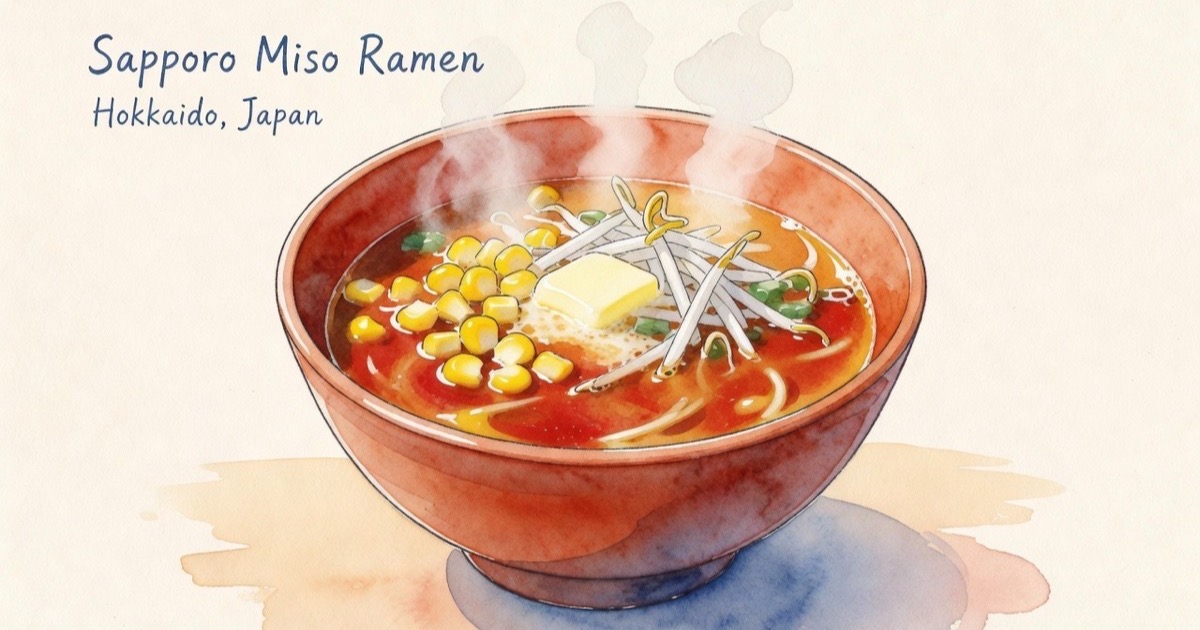
Miso Ramen Explained: Sapporo's Gift to Cold Winters
Warm up with the history and hearty flavours of miso ramen. From its origins in snowy Hokkaido to the intense wok-frying techniques and comforting toppings like butter and corn.
Miso ramen is the youngest of the major Japanese ramen styles, born in the mid-1950s in Sapporo, the capital of snowy Hokkaido. Designed specifically to combat the region's freezing winters, it is a rich, complex, and comforting bowl. By blending fermented soybean paste (miso) with a hearty stock, miso ramen offers an earthy, salty-sweet depth of flavour that is entirely distinct from its clear shoyu and shio predecessors.
The Birth of a Winter Classic
Miso ramen was invented at a Sapporo shop called Aji no Sanpei by its owner, Morito Omiya. In the post-war era, Omiya wanted to create a highly nutritious, warming dish for his customers. Inspired by Swiss bouillon soups and the health benefits of fermented miso, he began experimenting with adding miso paste to pork-bone broth. The dish was a massive success, establishing Sapporo as one of Japan's major ramen capitals and cementing miso's place in the national culinary canon.
The Wok-Frying Technique
Authentic Sapporo-style miso ramen is prepared using a unique wok-based cooking method. Instead of simply combining stock and tare in a bowl, the chef stir-fries minced pork, garlic, ginger, bean sprouts, and onions in a hot wok. The chef then splashes hot pork stock directly into the wok, creating an instant emulsification of oil and broth. Finally, the miso paste is stirred in, allowing it to cook slightly and release a smoky, caramelised aroma that infuses the entire soup.
Anatomy of a Sapporo Bowl
A classic Sapporo miso bowl is instantly recognisable by its hearty toppings and distinctive noodles. Here is what you will find inside:
- The Noodles: Thick, yellow, highly wavy (chijire) noodles with a high water content. The wavy shape is specifically designed to catch and hold onto the thick, textured miso soup.
- The Broth: A robust pork-bone or chicken stock blended with a custom mix of red (aka) miso, white (shiro) miso, and various spices, often finished with a thin layer of lard to trap the heat.
- The Toppings: Sautéed bean sprouts, onions, bamboo shoots, and often a signature pat of local Hokkaido butter and sweet corn.
Modern Variations: Spicy & Numbing Miso
Miso ramen has evolved far beyond its traditional Hokkaido roots. Today, modern chefs across Japan use the earthy base of miso to anchor intensely bold flavour profiles. The most popular modern variation is the 'karashibi' style, which combines rich miso with fiery red chillies and numbing Sichuan peppercorns, creating a complex, multi-sensory dining experience.
- Traditional Sapporo Style: Sweet, savoury, and highly comforting, featuring lard, stir-fried vegetables, and optional butter and corn.
- Spicy Karashibi Style: A fiery, modern spin that blends the depth of miso with customisable levels of heat and tongue-tingling numbness.
- Creamy Tori-Miso: A lighter variation that uses a thick chicken paitan stock as the base, offering a silkier texture than traditional pork-bone soups.
A bowl of miso ramen in Sapporo is more than a meal—it is an essential shield against the biting northern wind.
Browse ranked shops in Hokkaido
Mapped list with ratings, stations, and tourist-friendly filters.
Best ramen in HokkaidoPlanning a Tokyo Ramen Crawl?
Skip the 90-minute tourist lines. Use our free curated walking routes and ticket machine guides to explore neighborhood counters with confidence.
Former Fukuoka tonkotsu ramen apprentice and creator of Japan Ramen Guide. When not exploring Japan's ramen alleys, I build tools for Japan life like Daruma Japan Life and recommend foreigner-friendly housing through Affarah.