Tantanmen: Japan's Spicy Sesame Noodle Bowl and How It Differs From Chinese Dan Dan
Tantanmen started as Japan's version of Sichuan dan dan noodles — and then went in its own direction. It's now one of the most distinctive bowls in Tokyo, with a rich sesame broth and customisable heat.
Tantanmen (担々麺) is Japan's interpretation of Chinese dan dan mian — a Sichuan dish of noodles in a spicy, numbing sauce with minced pork and preserved vegetables. The Japanese version diverged significantly from the original, adding broth (the Chinese version is dry or barely sauced), softening the Sichuan numbing spice (hua jiao), and leaning heavily into sesame and tahini. What emerged is a dish that sits somewhere between ramen and the original dan dan — and has become one of the most popular specialist styles in Japanese cities.
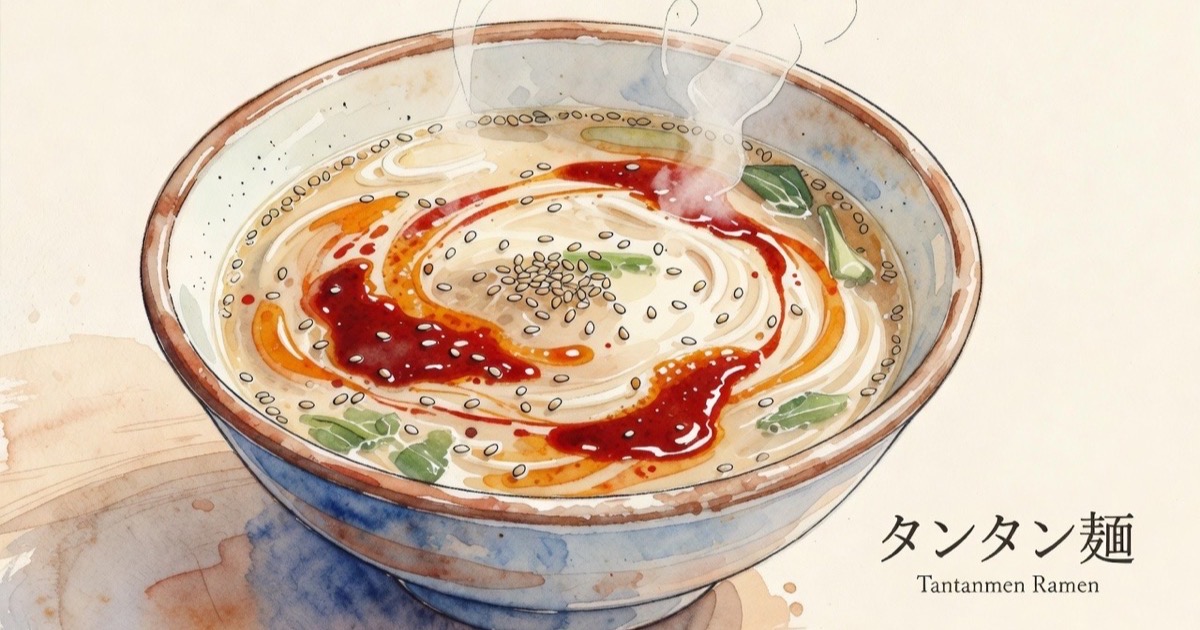
A culinary look at how Japanese Tantanmen is prepared, blending rich sesame paste with spicy chili oil
The Broth
Tantanmen broth is built on a sesame and tahini base — sometimes pure sesame paste, sometimes blended with chicken or pork stock. The result is rich, creamy, and nutty, with a heat that builds rather than hits immediately. Good tantanmen balances the sesame richness against acidity (usually from vinegar or yuzu) and the slow burn of chilli oil (ra-yu). It's a more complex flavour profile than most ramen styles.
Toppings
The classic tantanmen topping is soboro — ground pork cooked with doubanjiang (chilli bean paste) and sometimes seasoned with soy and sake. It adds texture and savoury depth to the smooth broth. Green onions, bok choy or spinach, sesame seeds, and additional chilli oil are standard. Some shops add a soft-boiled egg or small nuggets of crispy pork.
White Tantanmen
A popular variation is shiro (white) tantanmen — a milk or cream-based version that softens the heat further and adds dairy richness. It reads more like a creamy sesame soup than a spicy noodle dish. Good for people who want the sesame depth without significant heat.
How It Differs From Chinese Dan Dan
- Broth: Chinese dan dan is dry or lightly sauced; Japanese tantanmen has a full broth.
- Heat: Sichuan dan dan uses hua jiao (numbing Sichuan pepper); tantanmen relies on chilli oil and doubanjiang, which is spicy but not numbing.
- Noodles: Tantanmen uses standard ramen noodles; dan dan uses thinner Chinese wheat noodles.
- Richness: Tantanmen is generally richer and creamier due to the sesame/tahini base and sometimes added pork or chicken stock.
Where to Try It
NAKIRYU in Minami-Otsuka holds a Michelin star and is widely considered the definitive Tokyo tantanmen. The bowl is precise, balanced, and one of the most technically impressive in the city. Queues form before opening. Booking ahead via their online system when available is strongly recommended.
Planning a Tokyo Ramen Crawl?
Skip the 90-minute tourist lines. Use our free curated walking routes and ticket machine guides to explore neighborhood counters with confidence.
Former Fukuoka tonkotsu ramen apprentice and creator of Japan Ramen Guide. When not exploring Japan's ramen alleys, I build tools for Japan life like Daruma Japan Life and recommend foreigner-friendly housing through Affarah.