Japan Food Allergy & Celiac Press Kit
Everything you need to write about Japan Food Allergy & Celiac without emailing me first. All images below may be used in editorial coverage without asking.
Kayne Sheenan — developer, Tokyo
support@japanramenguide.com or k.sheenan@gmail.com — both reach me directly.
Fact sheet
- App name
- Japan Food Allergy & Celiac
- One-sentence pitch
- Japan Food Allergy & Celiac turns a traveller’s allergies or diet into a Japanese card, with audio, that restaurant staff can read and answer.
- Price
Free to download. Core phrases and guides stay free.
New users get a one-time 3-day All-Access trial that ends without a charge. After that, a 14-Day All-Access Pass or a one-time Lifetime All-Access purchase unlocks everything. Neither renews.
Region 14-Day Pass Lifetime (once) United States $4.99 $9.99 Japan ¥800 ¥1,500 United Kingdom £4.99 £9.99 Eurozone (Germany) €5.99 €9.99 Australia A$7.99 A$14.99 Canada C$6.99 C$12.99 App Store prices in each country, checked 24 October 2026. Apple sets the local price in other storefronts.
- Platforms
- iPhone (it also runs on iPad).
- Requirements
- iOS 16.4 or later. The app is in English, French, German, Italian, Spanish, Korean and Chinese (Simplified and Traditional); the cards are in Japanese.
- Released
- 30 September 2026. Current version 1.0.2.
- Developer
- Kayne Sheenan, working alone. No company.
- Location
- Tokyo, Japan
- App Store
- apps.apple.com/app/id6812123587
- Developer page
- Kayne Sheenan on the App Store
- Contact
- support@japanramenguide.com
About the app
One sentence
Japan Food Allergy & Celiac turns a traveller’s allergies or diet into a Japanese card, with audio, that restaurant staff can read and answer.
One paragraph
Eating out in Japan with a food allergy, celiac disease or a strict diet means explaining it in Japanese, about ingredients that are easy to miss, such as wheat in soy sauce and fish stock in miso soup. The app builds a Japanese card from 31 dietary needs, shows it to staff in large text with spoken Japanese audio, and lets them tap a reply. It also has a dining phrasebook, guides to what common dishes usually contain and help reading konbini labels. Everything works offline.
Full version
Japanese food carries ingredients a visitor cannot see: wheat in most soy sauce, fish stock in miso soup and many broths. For a traveller with an allergy or celiac disease, explaining that to restaurant staff in Japanese is the hard part of every meal.
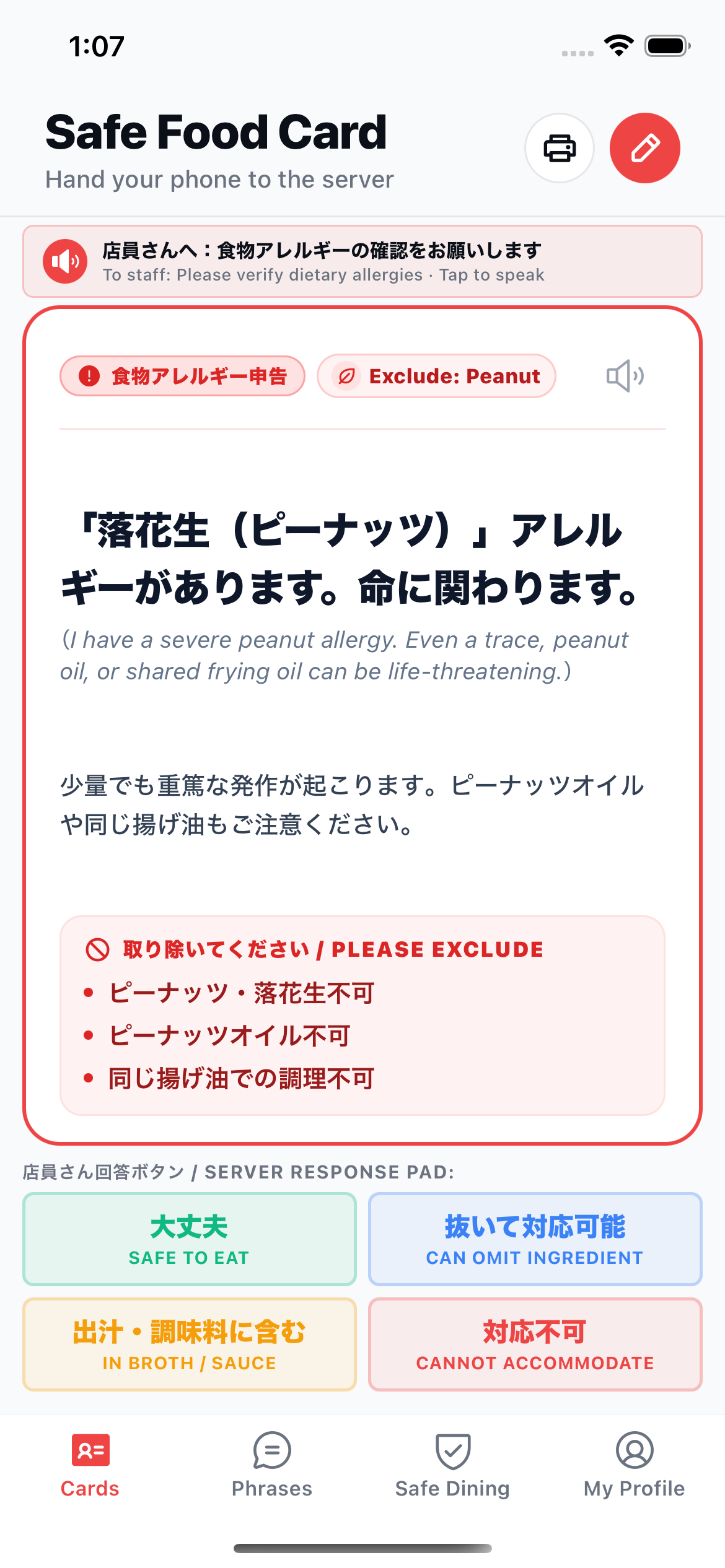
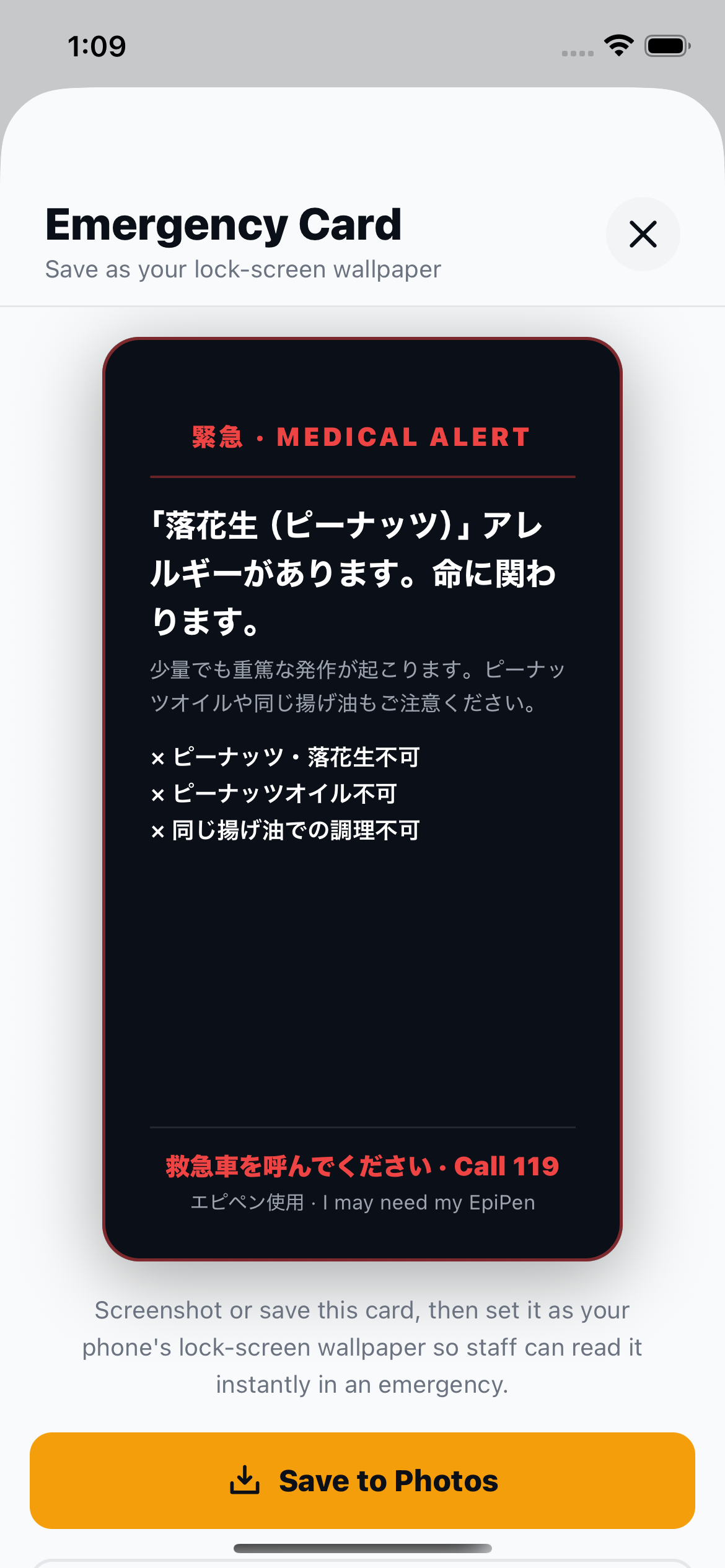
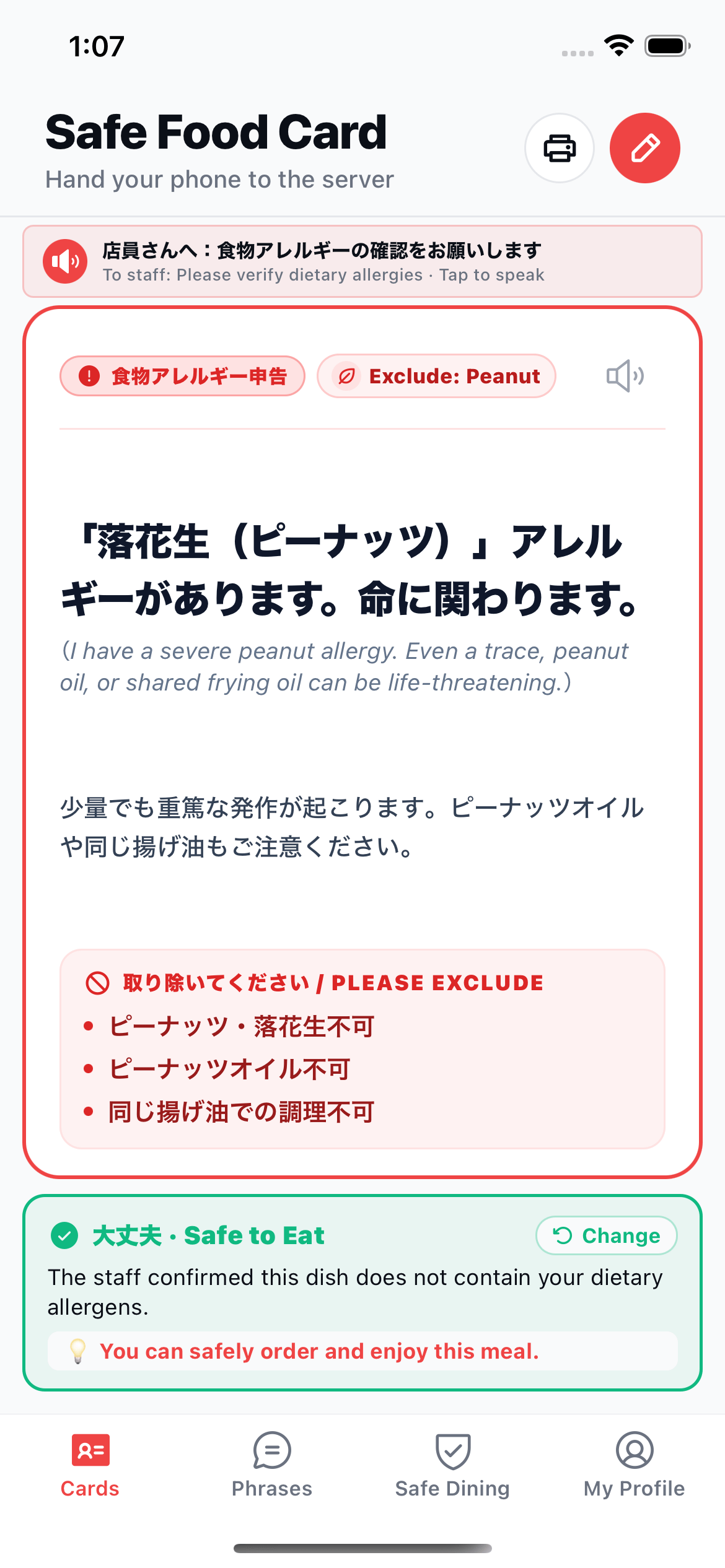
Japan Food Allergy & Celiac builds a card from 31 dietary needs, including gluten and celiac, wheat, egg, dairy, peanuts, tree nuts, soy, buckwheat, fish, shellfish, crustaceans, sesame, halal and vegan, and combines them into one card per traveller. Staff mode shows the card in large Japanese text, plays it as Japanese audio and gives staff a reply pad: safe to eat, can be removed, the broth or sauce contains it, or can’t accommodate.
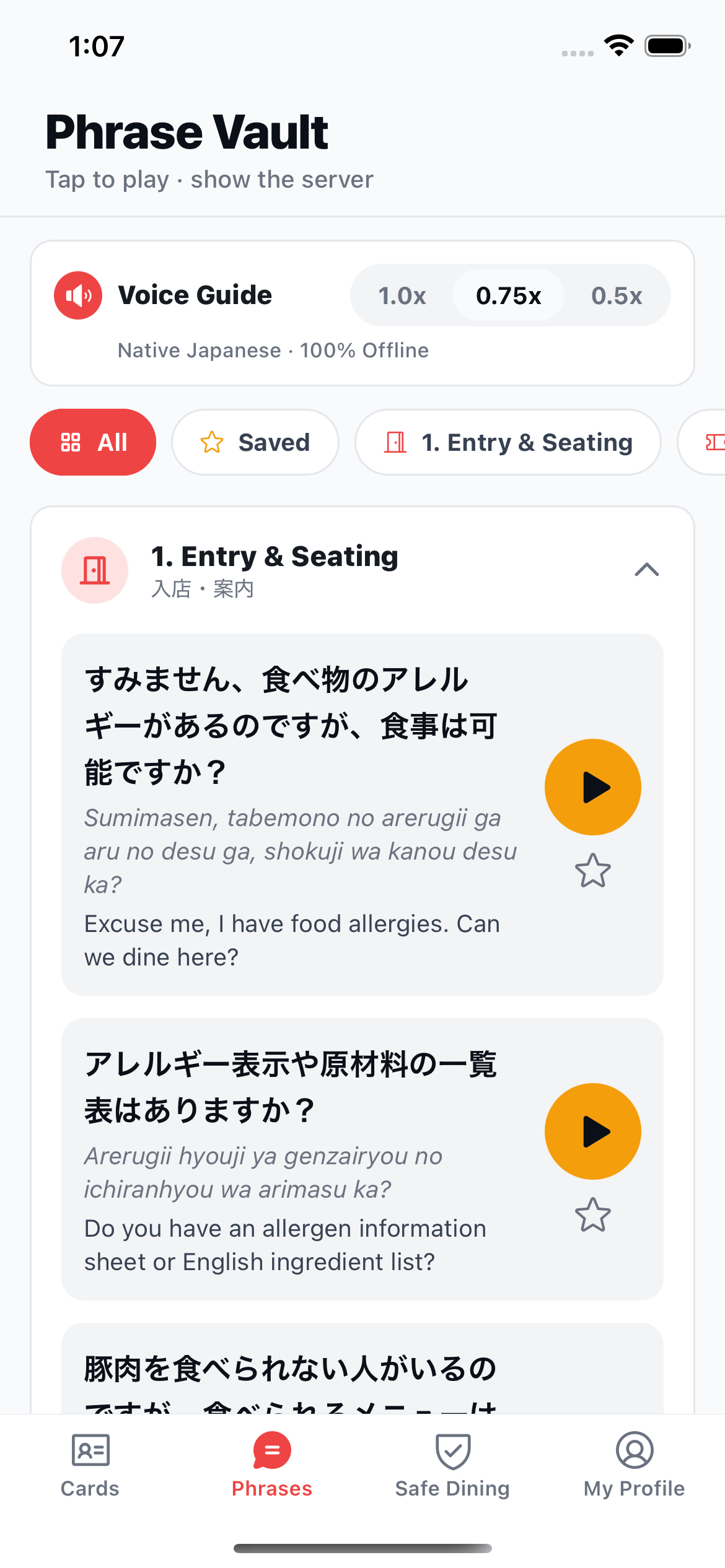
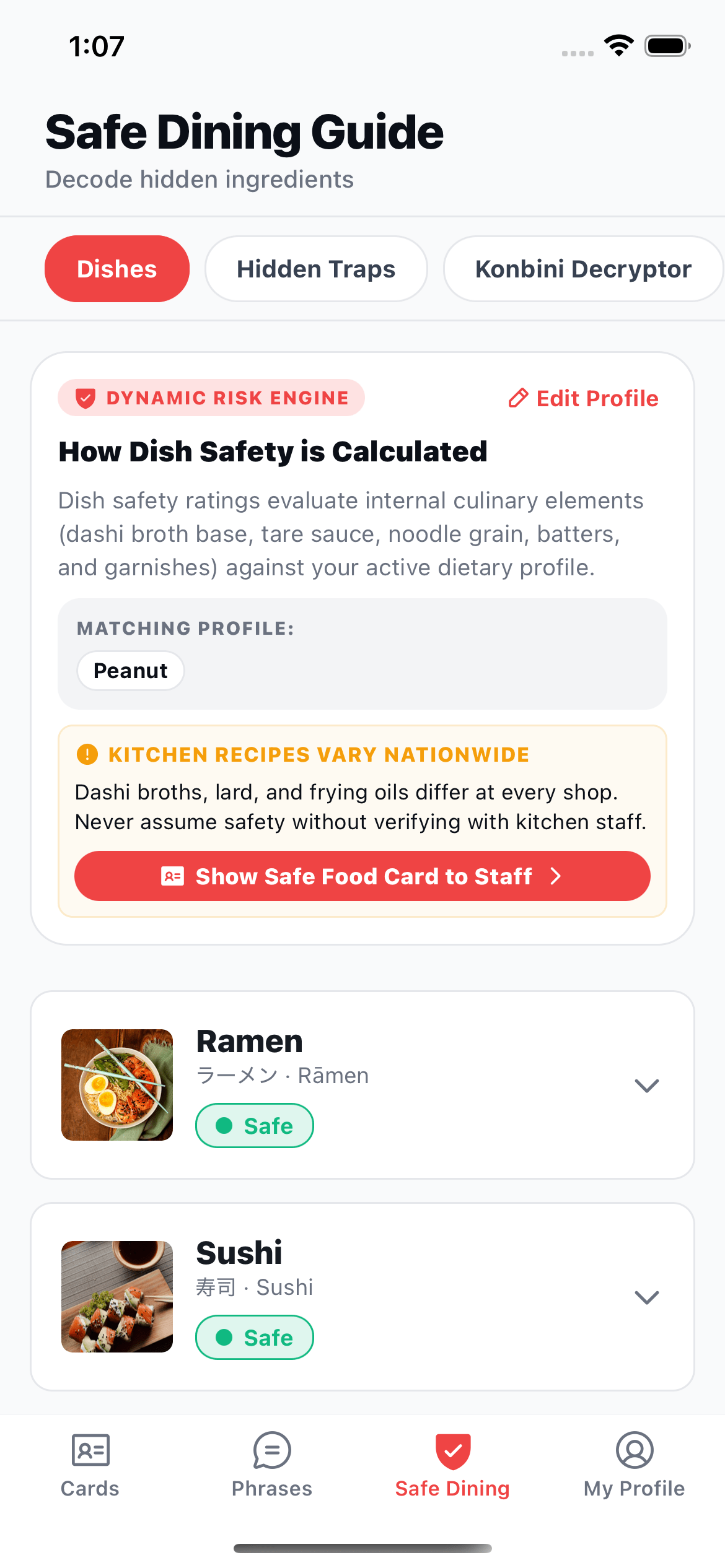
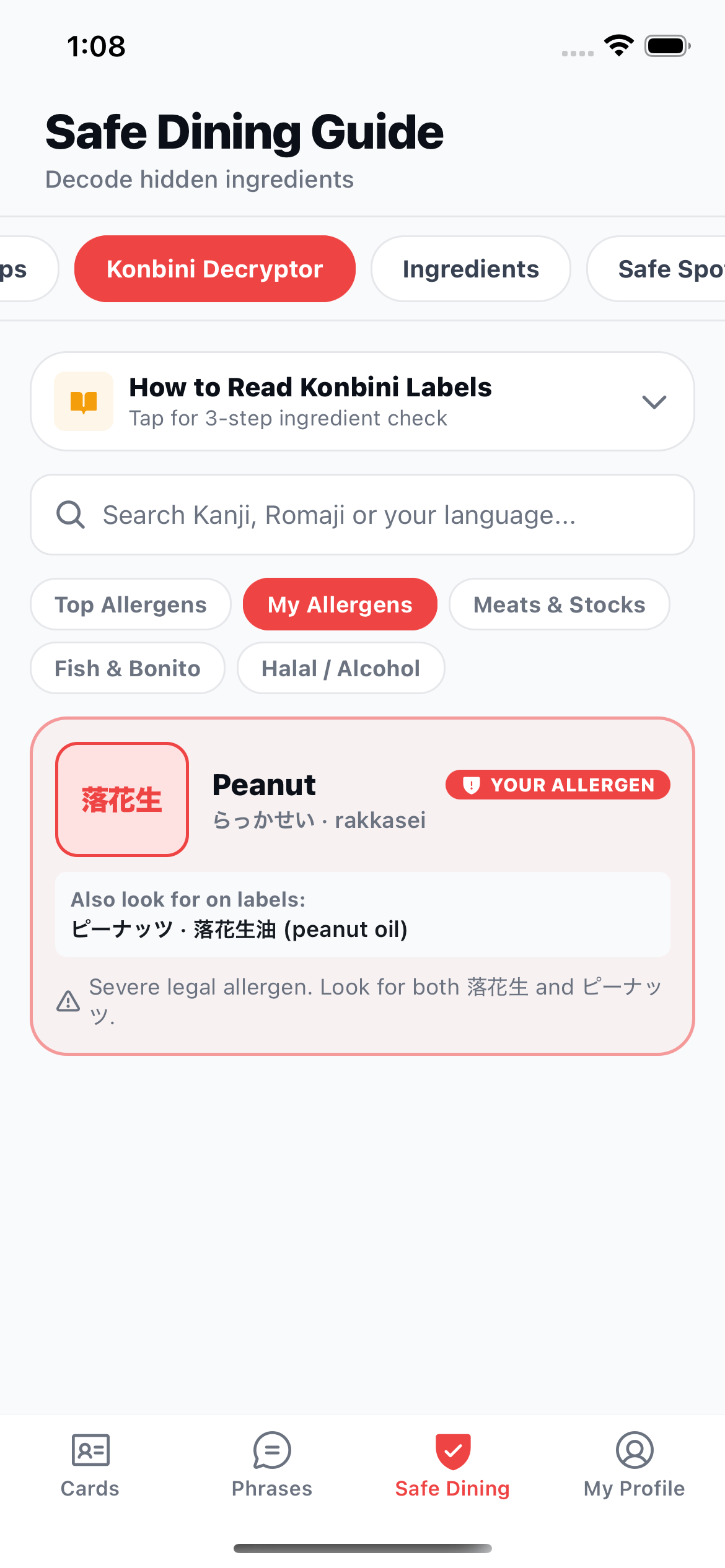
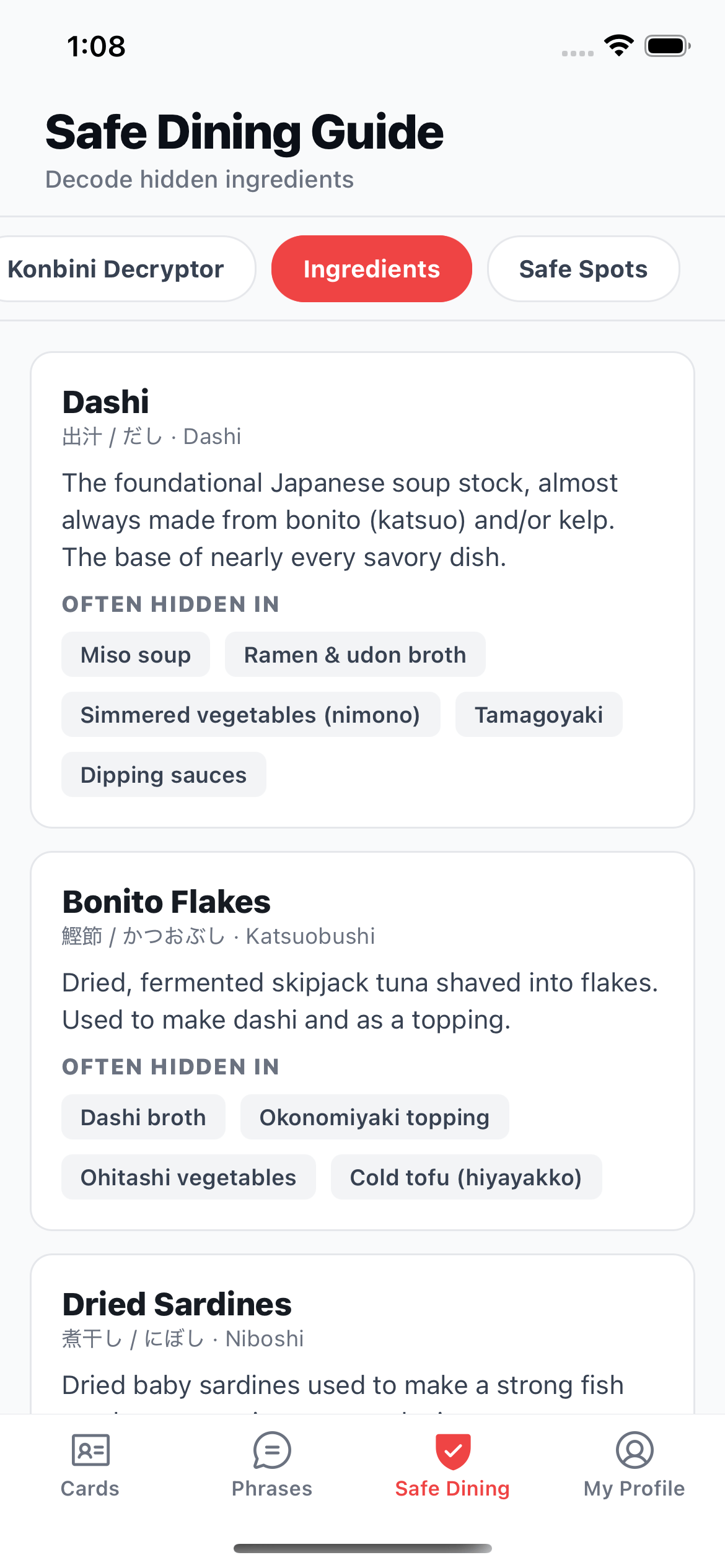
Around the cards sit a dining phrasebook with adjustable audio speed, guides to what common dishes usually contain, notes on hidden ingredients and help reading konbini labels. Japanese text, audio and dish pictures are stored on the phone, so it works without a signal. There is no account, and profiles stay on the device.
It is a communication aid, not medical advice or a guarantee of a safe meal, and the app tells users to confirm ingredients and shared preparation with staff. The Japanese audio is computer-generated.
Key features
- Japan Food Allergy & Celiac builds Japanese cards for 31 dietary needs, from celiac disease and peanut allergy to halal and vegan, and combines several into one card per traveller.
- Staff mode shows the card in large Japanese text with spoken Japanese audio, and staff tap a reply such as “safe to eat” or “can’t accommodate”.
- A dining phrasebook covers the questions travellers ask at the counter, with audio that can be slowed down.
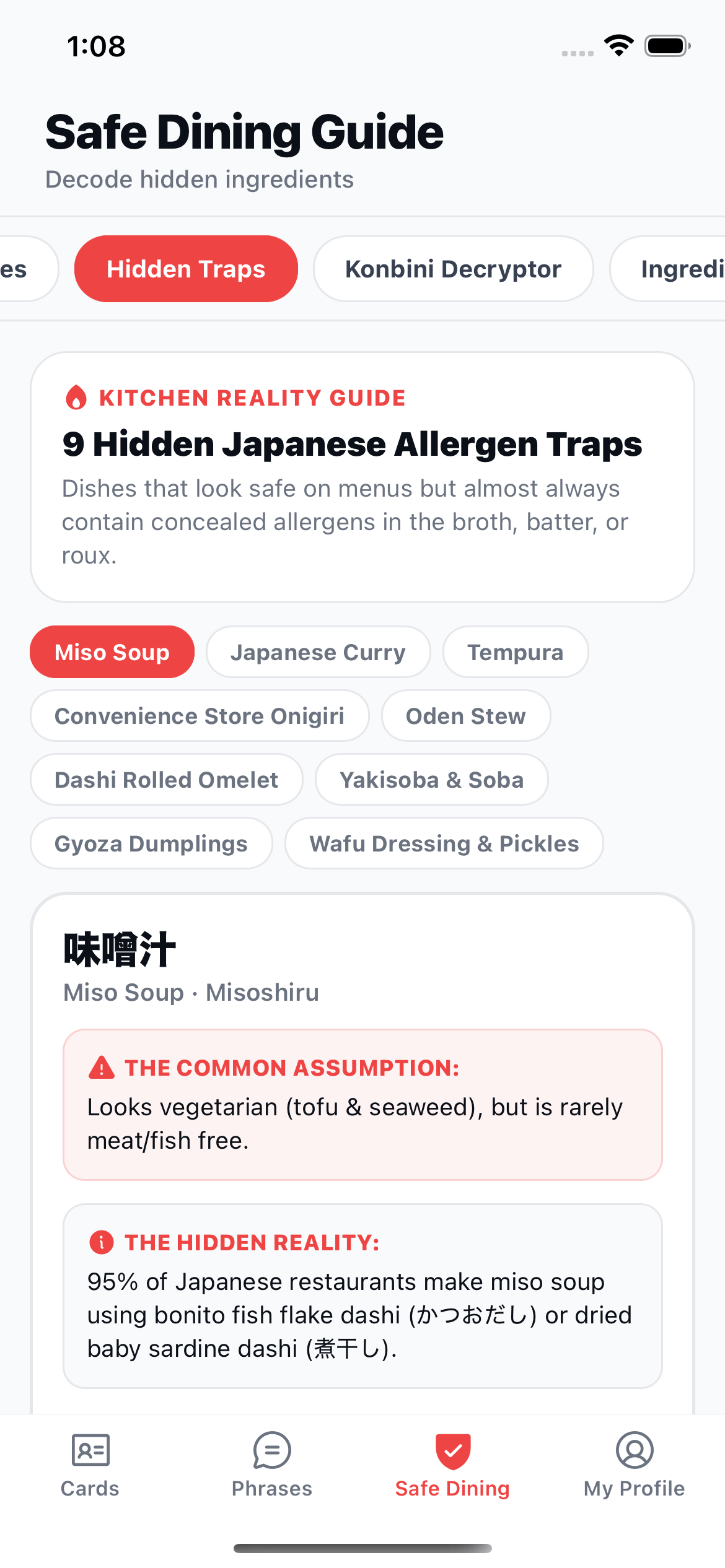
- Guides explain where allergens usually hide in Japanese food, such as wheat in soy sauce and fish stock in miso soup, and how to read konbini labels.
- Japanese text, audio and dish pictures are stored on the phone, so the app works offline.
- The app needs no account; profiles and dietary details stay on the device.
Screenshots
Raw iPhone captures at full resolution (1170 × 2532 PNG). No device frames, no captions burned in, no watermarks. The dietary profile is a demo. Click any image for the full-size file.
Icon
App icon, 1024×1024 PNG. Please do not alter it.

About the developer
Kayne Sheenan is a New Zealander living in Tokyo, where he works in software and builds iOS apps on his own, with no company behind them.
His other apps are Daruma, a planner for the paperwork of moving to Japan; YenPocket, a yen converter with a price tag scanner; and 100 Bites, a first-foods guide for parents of babies starting solids.
Contact
Kayne Sheenan — developer, Tokyo
support@japanramenguide.com or k.sheenan@gmail.com — both reach me directly.
Happy to answer questions or talk on the record.