Why Kitakata Station Beats Shibuya for Ramen Shops in Our Guide
Kitakata Station is the most common nearest station across all 1,095 shops in our guide, ahead of Namba, Yokohama and Shibuya. Here is how a Fukushima city of 40,000 got there.
Of the 1,095 shops published on Japan Ramen Guide, 23 give Kitakata Station as their nearest stop. No other station in the guide has more. Namba has 18, Yokohama 17, and Shibuya and Asakusa 16 each. Kitakata is a city of 40,049 people in Fukushima Prefecture (the city's own figure, October 2026), and 32 of our shops are filed under it. For the bowl itself (flat wavy noodles, clear shoyu broth) see our Kitakata ramen guide. This post is about the numbers and how the town got them.
What our listings show
- 32 published shops are filed under Kitakata. 29 have a Kitakata city address. Three sit just outside: two in Nishiaizu and one in Tadami.
- 23 name Kitakata Station as the nearest station. Another 4 use Aizu-Toyokawa, 2 use Nozawa, and Ubado, Yamato and Tadami have one each.
- 20 are a walk of 15 minutes or more from their station. Kitakata ties with Yamagata for the most shops in that group (see our worth the walk list).
- 10 of the 32 listings say the shop closes when the soup runs out.
- 8 are flagged cash-only.
Our 32 are a slice of the town. The Kura no Machi Kitakata Ramenkai, the local association of ramen shops, puts the number at about 100 in the city and says Kitakata is often called the most ramen shops per head in Japan.
A regional ramen with a known starting point
Most regional styles grew up without anyone writing down a first shop. The Kitakata tourism association points out that Kitakata is unusual because its origin is clear. The association's timeline gives the details. Ban Kinsei (潘欽星), born in Zhejiang, China, came to Japan in 1925 at 19 and worked in Nagasaki and Yokohama. In 1927 he moved to Kitakata, where an uncle worked at the Kano mine, and sold shina soba from a street cart. The association names his shop, Genraiken, as the root of Kitakata ramen.
The next steps came after the war. In 1945 Shanghai Shokudo opened and Makoto Shokudo (満古登食堂) started serving shina soba. In 1947 Hasunuma Suekichi opened a noodle factory that made machine-cut curly noodles in volume. In 1958 Bannai Shinkichi, who had trained at Shanghai Shokudo, opened Bannai Shokudo, now the best-known name in town.
The storehouses brought the visitors
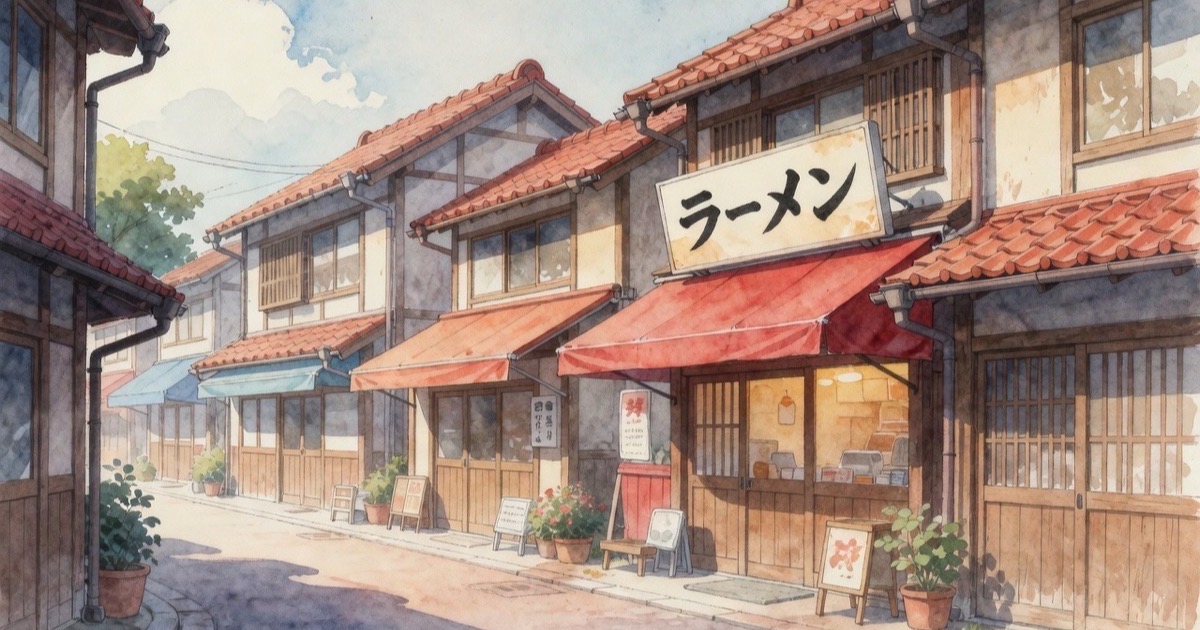
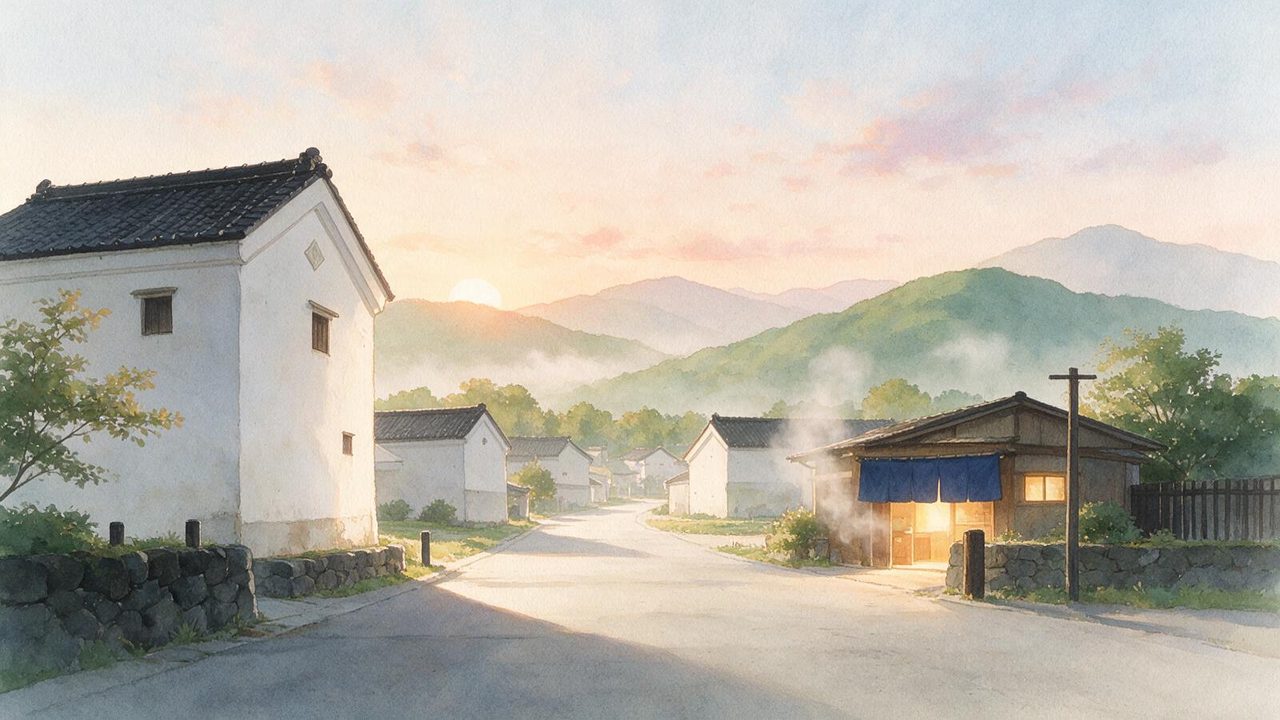
Kitakata was a brewing town. Soy sauce, miso and sake makers filled it with kura, the thick-walled storehouses you still see on its streets. In 1974 the photographer Kaneda Minoru held an exhibition called “Kura no Machi Kitakata” (town of storehouses). In 1975 NHK broadcast an episode of its travel series Shin Nihon Kiko about the town, and storehouse tourism began. The ramen association credits those visitors with first spreading the word about the town's ramen.
The rest of the timeline reads like a slow snowball. In 1983 the travel magazine Rurubu ran a Kitakata ramen feature, the city had about 200,000 visitors a year, and the city began promoting ramen around then. In 1987 a Kitakata ramen shop opened under the tracks near Shimbashi in Tokyo. By 1993 the city passed one million visitors a year.
Soft water and local noodle makers
The tourism association links the taste to water from the Iide mountains, a very soft water (hardness 13) that was picked for the Heisei-era list of Japan's 100 best waters. The ramen association describes the standard noodle as flat, aged and high in water, about 4 mm wide. Several noodle makers in town sell direct to visitors, which is why boxed Kitakata ramen is an easy souvenir. In 2021 Japan's Agency for Cultural Affairs named Kitakata ramen a “100-year food”, a food culture passed down across generations.
Ramen for breakfast
Kitakata is known for asa-ra, morning ramen. The tourism association lists several theories for how it started: workers coming off night shifts at three-shift factories, farmers finishing early field work, and people warming up after returning from seasonal winter jobs. JR East travel campaigns made it known outside the region.
Our listings back it up. Bannai Shokudo, Ramen Umeya, Fukushima Ya, Kadoya Shokudo and Men Zamurai list a 7:00 opening, and Kofuku opens at 7:30. Ajian Shokudo and Kirin open at 7:00 on weekends.
Where to start
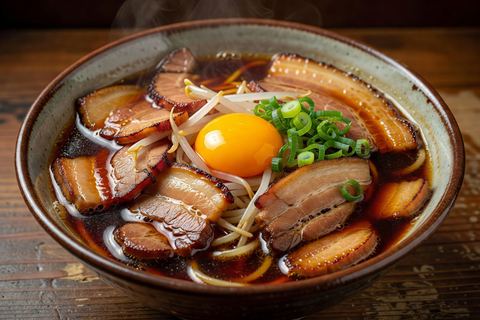
- Bannai Shokudo: the 1958 shop. Its niku soba buries the noodles under pork belly. Cash only, per our listing.
- Matsu Shokudo: right next door to Bannai, with a more soy-forward broth and a faster queue when Bannai's line is long.
- Ramen Umeya: opens at 7:00. Our listing notes the owner trained at Bannai Shokudo.
- Kiichi: a salt-broth bowl in Sekishibamachi. It is a 30-minute walk from the station, so most people take a taxi.
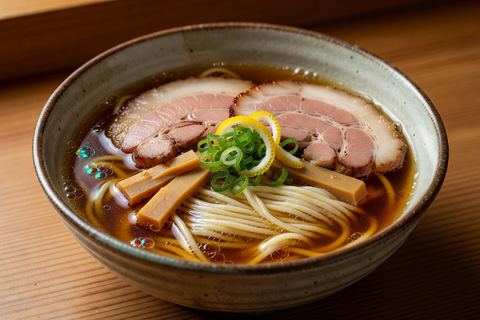
- Ajian Shokudo: shio ramen with shijimi clam stock and fresh local wasabi.
- Nishiaizu Echigoya: over the border in Nishiaizu, three minutes from Nozawa Station, serving stir-fried vegetable miso ramen.
Start with these Kitakata counters
Browse all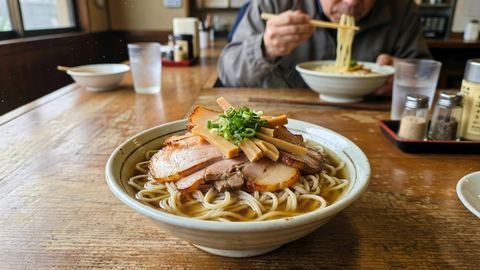
Frequently asked questions
How many ramen shops are there in Kitakata?
The local ramen association puts it at about 100 shops in the city. Japan Ramen Guide lists 32 (29 inside Kitakata city and 3 just outside), and 23 of them give Kitakata Station as their nearest stop, more than any other station in our guide.
Who started Kitakata ramen?
According to the Kura no Machi Kitakata Ramenkai, Ban Kinsei, a young man from Zhejiang, China, began selling shina soba from a street cart in Kitakata in 1927. His shop, Genraiken, is named as the origin of the style.
Why do people eat ramen for breakfast in Kitakata?
There are several theories, including night-shift factory workers, early farm work and warming up after seasonal winter jobs. Today several shops open at 7:00, including Bannai Shokudo, Ramen Umeya and Fukushima Ya.
Browse ranked shops in Kitakata
Mapped list with ratings, stations, and tourist-friendly filters.
Best ramen in KitakataPlanning a Tokyo Ramen Crawl?
Skip the 90-minute tourist lines. Use our free curated walking routes and ticket machine guides to explore neighborhood counters with confidence.
Former Fukuoka tonkotsu ramen apprentice and creator of Japan Ramen Guide. When not exploring Japan's ramen alleys, I build tools for Japan life like Daruma Japan Life and recommend foreigner-friendly housing through Affarah.