How to Use a Ramen Ticket Machine (食券機) in Japan, Step by Step
203 shops in our guide take orders through a ticket machine. What the buttons mean, how to pay, what to do with the ticket, and easy shops to practise at in Tokyo, Osaka, Kyoto and Sapporo.
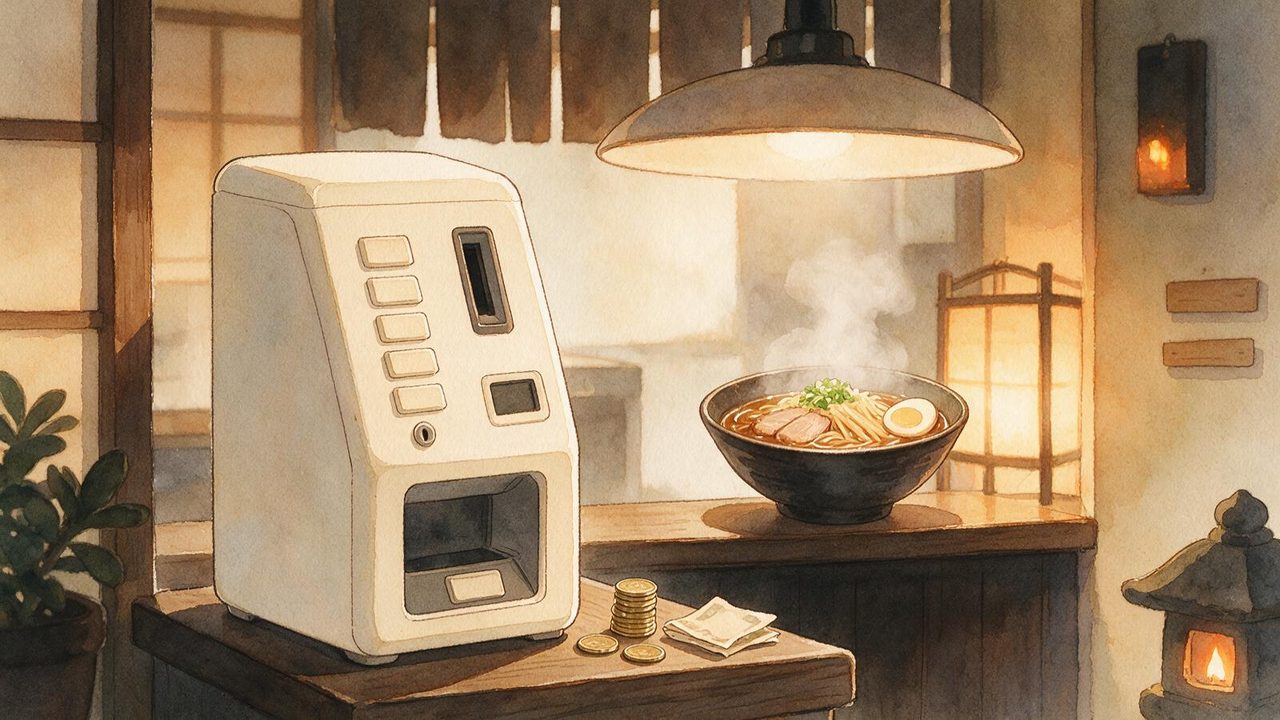
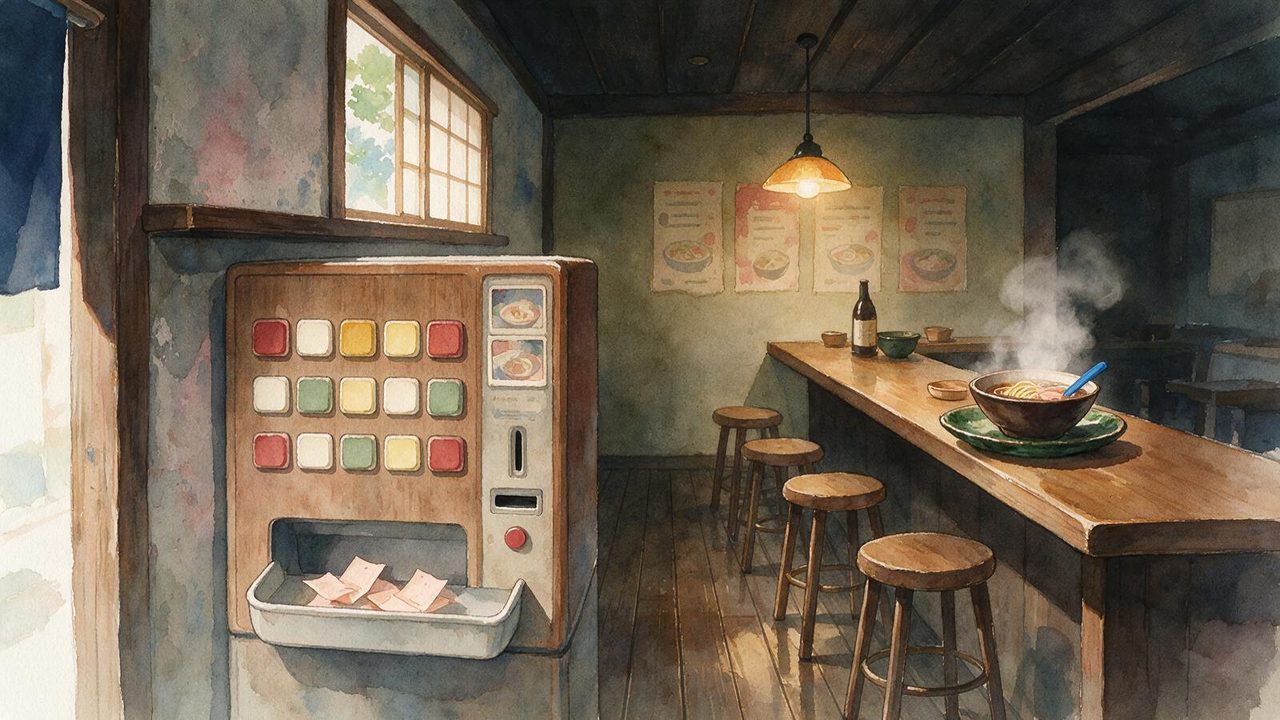
A ticket machine (食券機, shokkenki, also called 券売機, kenbaiki) stands inside the door of many ramen shops. You choose and pay at the machine, get a paper ticket, and hand it to the staff. Nobody takes your order at the table. 203 of the 1,095 shops in our guide are flagged as using one. We only set the flag where a source says so, so the real number is higher. Our guide to ordering ramen covers the whole visit; this post is only the machine.
Step by step
- Check whether to buy first. At most shops you buy before you sit or queue. At some busy shops the staff tell you when to buy, often when you near the front of the line. If people in the queue are holding tickets, buy one.
- Pay first. On many machines the buttons only light up after you put money in. Feed in notes or coins, or tap an IC card if the machine has a reader. The amount shows on a small display.
- Press your bowl. The top-left button, or the biggest one, is often the house signature. Prices are printed on each button.
- Add extras. Toppings, a large portion, rice or a drink are separate buttons. Press each one; your credit counts down.
- Take your ticket and change. Press the change lever or button (おつり, otsuri) if the change does not drop out on its own.
- Hand the ticket over. Give it to the staff, or put it on the counter in front of your seat. This is when you say noodle firmness or other preferences if the shop asks.
Words on the buttons
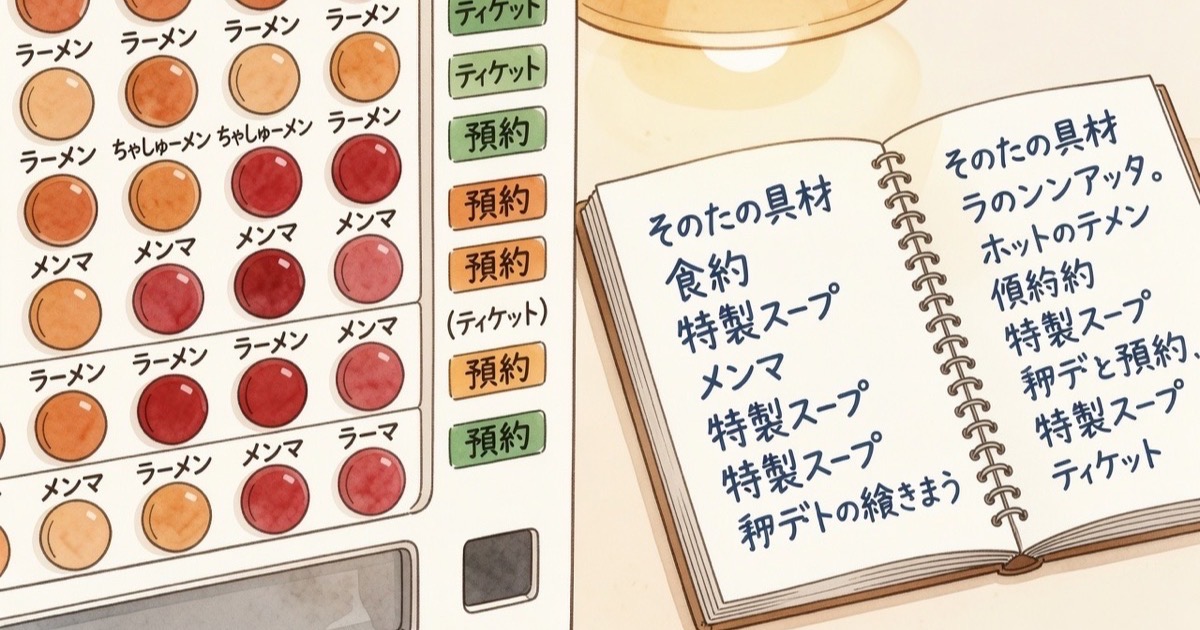
| Japanese | Reading | Meaning |
|---|---|---|
| ラーメン / らーめん / 中華そば | rāmen / chūka soba | The basic bowl |
| 特製 | tokusei | “Special”: the bowl with all the toppings |
| 味玉 / 味付玉子 | ajitama | Seasoned soft-boiled egg |
| チャーシュー / 叉焼 | chāshū | Extra pork slices |
| 大盛 | ōmori | Large portion of noodles |
| 替玉 | kaedama | Extra noodles for the same soup |
| つけ麺 | tsukemen | Dipping noodles |
| ご飯 / ライス | gohan / raisu | Rice |
| おつり | otsuri | Change |
| 売切 | urikire | Sold out (button lit red or covered) |
Paying: cash, cards and IC
Older machines take cash only, usually ¥1,000 notes and coins. Newer touch-screen machines often take cards and IC transit cards too. In our guide, 97 of the 203 ticket-machine shops are also flagged cash-only and 79 are flagged as taking cards. Bring ¥1,000 notes either way; our cash-only ramen guide has the details.
Shops to practise at
Start with a machine that has an English screen. These shops are flagged for a ticket machine, an English or multilingual menu, and cards:
- AFURI Shinjuku Lumine, Tokyo: touch screens outside with full English. Our listing says it is fully cashless.
- Ramen Kamo to Negi Asakusa, Tokyo: touch-screen machine outside in English and Chinese, taking cards, IC and cash. Buy before you join the line.
- Ichiran Shibuya, Tokyo: the machine takes cash, IC cards and major credit cards, and the order sheet comes in English, Korean and Chinese.
- Ginza Hachigo, Tokyo: a six-seat counter whose ticketing terminal prefers cards and IC.
- Sumire Nakanoshima Honten, Sapporo: touch-screen machines in English that take credit and IC cards.
Then try a classic cash machine. These are flagged for a ticket machine and cash only:
- Chuka Soba Shibata, Tokyo: our listing says to buy your ticket only when staff tell you, with notes no larger than ¥1,000.
- Iekei Sohonzan Yoshimuraya, Yokohama.
- Kingemon Honten, Osaka.
- Tori Soba Ai, Kyoto.
Easy ticket machines to start with
Browse all
Frequently asked questions
Do I need cash for a ramen ticket machine?
Often, yes. In our guide 97 of the 203 ticket-machine shops are flagged cash-only. Newer touch-screen machines often take cards and IC transit cards, but carry ¥1,000 notes to be safe.
What do I do with the ticket?
Hand it to the staff or leave it on the counter at your seat. If the shop asks about noodle firmness or other options, tell them when you hand it over.
Which button should I press if I can't read Japanese?
The top-left or largest button is often the shop's signature bowl. 特製 (tokusei) is the version with every topping, and 味玉 (ajitama) adds a seasoned egg.
Planning a Tokyo Ramen Crawl?
Skip the 90-minute tourist lines. Use our free curated walking routes and ticket machine guides to explore neighborhood counters with confidence.
Former Fukuoka tonkotsu ramen apprentice and creator of Japan Ramen Guide. When not exploring Japan's ramen alleys, I build tools for Japan life like Daruma Japan Life and recommend foreigner-friendly housing through Affarah.